Visiting Through Closed Windows; Families Ask DeWine to Ease Visitation Restrictions at Nursing Homes

Families say loved ones are declining rapidly due to extreme isolation and perceived abandonment.

It’s been nearly three months since Marjorie Williams has seen her family, except through a closed window, and it has taken a toll on the 89-year-old nursing home resident.

Marjorie’s family is one of many families left bewildered by Governor DeWine’s recent announcement to begin easing visitation restrictions at assisted living facilities – but failed to include nursing homes, which have been locked-down since early March.

Regardless of the visitation ban which was intended to keep COVID out, the virus found its way into some 200 of Ohio’s 960 nursing homes.

Many families have reported significant declines in the health of their loved ones during this time, due to isolation, perceived abandonment and because no one is there to advocate or assist with care.

“I’m so crushed at this news,” said Melissa Williams, Marjorie’s daughter-in-law. “These are typically people nearing the end of their lives. They are suffering, and we as family members are suffering. It would be terrible if they passed during this time and our last memories are of them being alone.”

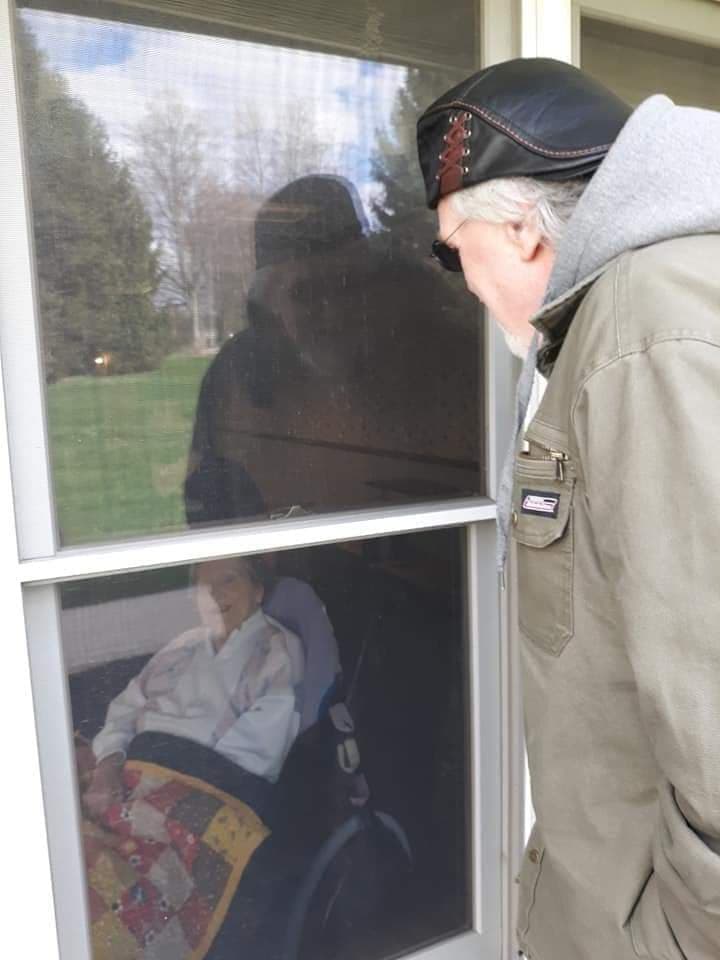
Marjorie Williams gets out of her room for a brief visit with family through a closed window.

DeWine announced this week that assisted-living and intermediate care facilities for individuals with development disabilities can begin to allow outdoor visitation beginning June 8. DeWine stated that he came to this decision because of the impact a prolonged loss of connection can have on quality of life.

“He is not going to allow nursing home residents to have this same opportunity for visits,” said Williams. “It is incredibly cruel to leave them out. It is heart-wrenching for all of us who are left out in the cold with this news.”

Marjorie has been in a Mansfield nursing home since October after taking several falls and a bried hospitalization. The family visited with her regularly before DeWine’s order to lockdown such facilities.
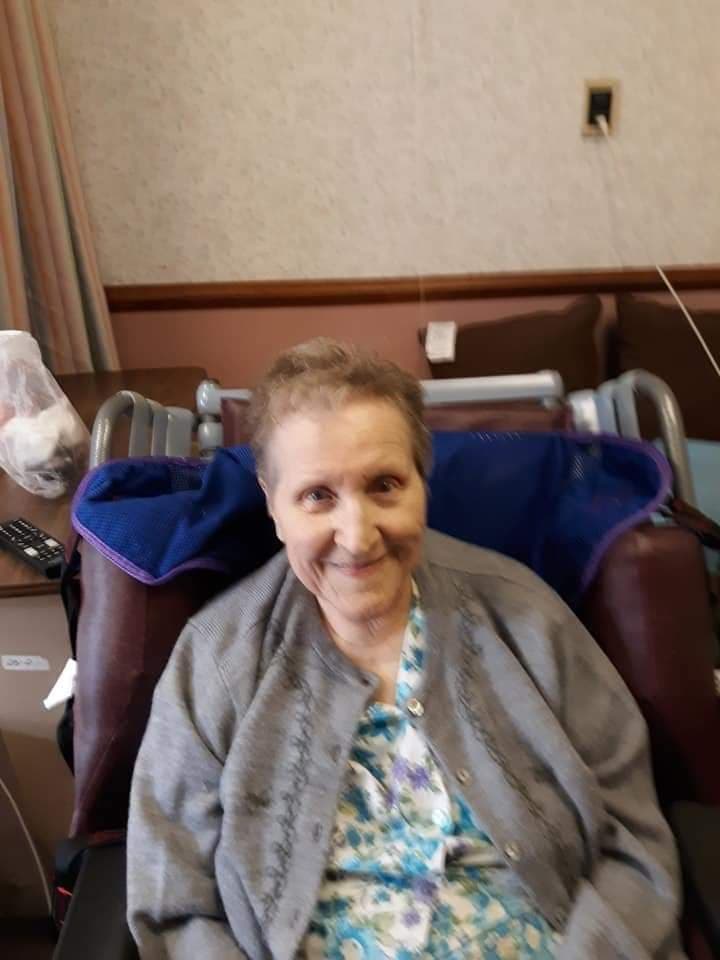
Families ask Gov. DeWine to ease visitation restrictions before it’s too late.

“People in nursing homes typically have Alzheimer’s or dementia. They have a hard time grasping why we cannot come in to visit them. They feel abandoned and we have been forced to abandon them.

“We have to remember these folks are not only isolated from their families, they are isolated from other residents, basically banished to their rooms. Imagine how it is for them. They are being locked down like prisoners. It seems inhumane to me.”

Williams said that when they visit with 89-year-old Marjorie through a closed window, she asks why they can’t come inside or why she cannot go outside.

“These are difficult patients to work with and they respond best when there is family assistance.”

Williams said that locking out visitors was supposed to protect them from covid. “Yet nothing was done to protect them from staff who could carry it in to them. So it seems it was all for nothing.”

The family went to visit Marjorie over Memorial Day weekend.

“She didn’t remember any of our names,” said Williams. “She is losing her ability to remember, and our absence makes it more difficult. It broke our hearts.

“I don’t think DeWine understands how this is affecting the children who have to be away from the grandparents they adore. Our 16-year-old granddaughter Emma was among the window visitors. She had to turn away because she literally broke into tears and was sobbing.
“My mother-in-law is an amazing woman who has been there for everyone and now when she needs us the most we can’t be there for her,” said Williams. “She owned a couple businesses and lost her husband when he was 37 to heart disease. She raised her two sons by herself and never remarried.

“I’ve heard from so many people who are in the same boat and it is heartbreaking. I wish someone would ask the Governor why he is excluding nursing homes. I’ve tried to reach out to DeWine and he ignores me.”

Memories Shared: A WWII Veteran Describes his Experience Serving in Europe

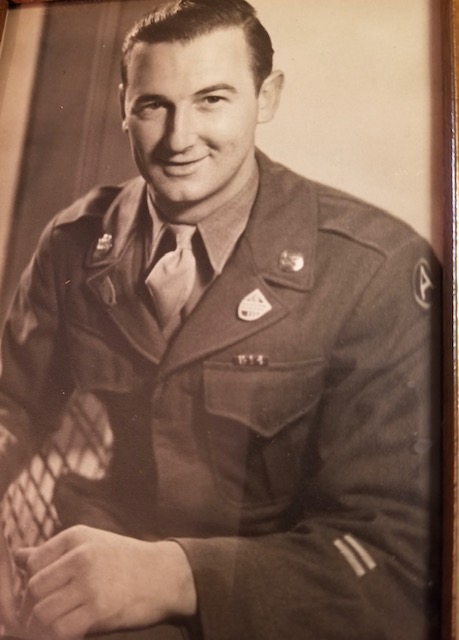
Roy Kenneth Mercer, WWII veteran from southeast Ohio.

Roy Mercer is a WWII vet and a walking, talking history book. At 96, he’s still as sharp as a tack and knows how to tell a great story.

With the passing of our heroic veterans, memories of WWII disappear every day. The sights, sounds, triumphs and losses - stories gone forever with the soldiers who hade it home from the world’s deadliest conflict.

Most WWII vets are 90-plus-years-old and their memory’s may not be what they once were.

As for Mercer, he still vividly recalls many events and details from his time overseas, where he fought with 693rd Field Artillery Battalion in Scotland, England, France, Germany and finally Austria.

Mercer left his Monroe County home for the frontlines in March of 1943, at the age of 19. When he returned in September of 1945, he couldn’t believe he had made it back alive. “I didn’t even catch a cold,” he joked.

At the end of the war, Mercer witnessed the Germans surrender in defeat as they marched out of Berchtesgaden, home of Adolf Hitler’s famous mountain retreat.

Hear Mercer describe the German’s historic surrender from Berchtesgaden

Mercer’s nephew, Wilfred Hodge, an infantryman who was about the same age as Mercer, wasn’t as fortunate. Hodge was killed in the line of duty in Belgium in November of 1944, when was hit with artillery fire.

Hodge was the son of Mercer’s older sister.

Wilfred Hodge

Both Mercer and Hodge were from the same small community of Jerusalem, in Southeast Ohio.

The American flag hangs from Mercer’s front porch year-round.

Like most WWII soldiers serving in Europe, Mercer slept outside on the ground every night.

Mercer shares a story of sleeping in a bed for the first time

When Mercer left for the war, his mother was ill with TB. When he returned, she was nearly bed-ridden and died a short time later.

Today, Mercer lives in the same quiet Jerusalem neighborhood he grew up in. He sits on his front porch when he’s not busy in his shop, where for many years he made intricate wooden grandfather clocks. He also worked in the oil fields for several decades.

If you pull up a chair, Mercer might share some stories of his WWII experiences, while leafing through a scrap book his family put together with pictures he sent home during the war.

Numerous False Positive COVID Results at Ohio Care Facility

Meanwhile, the CDC and some state health departments have been reporting positive COVID tests and positive antibody tests as one grand total, claims a major news outlet

An East Ohio nursing facility knew something was amiss when numerous COVID tests of staff and patients came back with a positive result - and no one had any symptoms.

Mason Bigler told WTRF TV it all began when they contracted with a private lab to do their testing. Bigler is the executive director of Rolling Hills Rehabilitation and Care Center in Bridgeport.

Bigler said that they swabbed the residents and employees last week, and the lab promised results within 48 hours. But days went by, and there were no results.

Labs typically use molecular tests, which involve inserting a 6-inch long swab into the back of the nasal passage through one nostril and rotating the swab several times for 15 seconds. This process is then repeated through the other nostril. The swab is then inserted into a container and sent to a lab for testing.

A positive result indicates an active COVID-19 infection but does not rule out bacterial infections or coinfections with other viruses. However, there’s a small chance that it could be a false positive, meaning that the test is positive, but you don’t have a COVID-19 infection.

Days passed with no results, and the facility was told that there was an equipment breakdown at the lab, and the lab sent their swabs to a third-party lab across the country.

Then, said Bigler, they started getting widespread positive test results back, both of the staff and residents.

A source at the facility said 18 positives were returned in all.

Bigler said he was convinced that the results were not accurate because no one had any symptoms. Bigler then contacted Wheeling Hospital in West Virginia and they agreed to do the re-testing.

At this point, 95% of the re-test results are back, and every one of them is negative, said the administrator.

“It just spotlights how poor the testing has been,” Bigler said.

In addition to COVID testing, there are antibody tests that scan a patient’s sample for evidence of past infections. Antibody tests cannot be used to diagnose an active COVID-19 infection.

Recently, it was learned by The Atlantic that the U.S. Centers for Disease Control and Prevention (CDC) and several state health departments have been reporting COVID-19 diagnostic tests and antibody tests as one grand tally, rather than keeping their results separate, The Atlantic reported.

Reporting these numbers as a lump sum, rather than two distinct data points, presents several major issues.

Namely, combining the numbers could make America’s diagnostic testing capabilities and testing rates appear higher than they actually are, according to The Atlantic.

The tests serve profoundly different purposes, “positive” results from either test cannot be interpreted in the same way. Reporting all the positive results together, as one number, could skew our understanding of how many new COVID-19 cases emerge over time — a crucial metric to help control outbreaks as states begin reopening.

When told how the CDC chose to lump the results of both tests together, director of the Harvard Global Health Institute Ashish Jha told The Atlantic, “You’ve got to be kidding me … How could the CDC make that mistake? This is a mess.”

Combining these two signals makes the data difficult to interpret and could be misleading to the public, because the combined number does not reflect the rate of new infection (and the number of infectious people circulating) in their region, William Hanage, an epidemiology professor at the Harvard T.H. Chan School of Public Health, told The Atlantic. “Combining a test that is designed to detect current infection with a test that detects infection at some point in the past is just really confusing and muddies the water,” he said.

Small Businesses in the Crosshairs

An Ohio legislator has taken up the fight for small businesses that are attempting to reopen under an administration that has come to be more punitive than supportive.

Bars and restaurants were permitted to open for outdoor dining late last week. Some of these establishments came under fire from Gov. Mike DeWine after alleged complaints of crowds and chaos. Indoor dining was reopened Thursday.

Rep. Jon Cross has become an ambassador of sorts, helping small business owners who are seeking clarity regarding regulations set forth by the Governor, but who have instead been threatened and bullied.

On Monday, DeWine warned restaurant and bar owners that they could lose liquor licenses or face criminal charges if they don’t comply with social-distancing requirements and other measures.

Cross said that what business owners need is clarity, not threats.

“There’s a lot of confusion in the marketplace,” said Cross. “What we need are ambassadors going to these restaurants and bars, not to come in like a swat team, but to say, ‘How can we help you?’

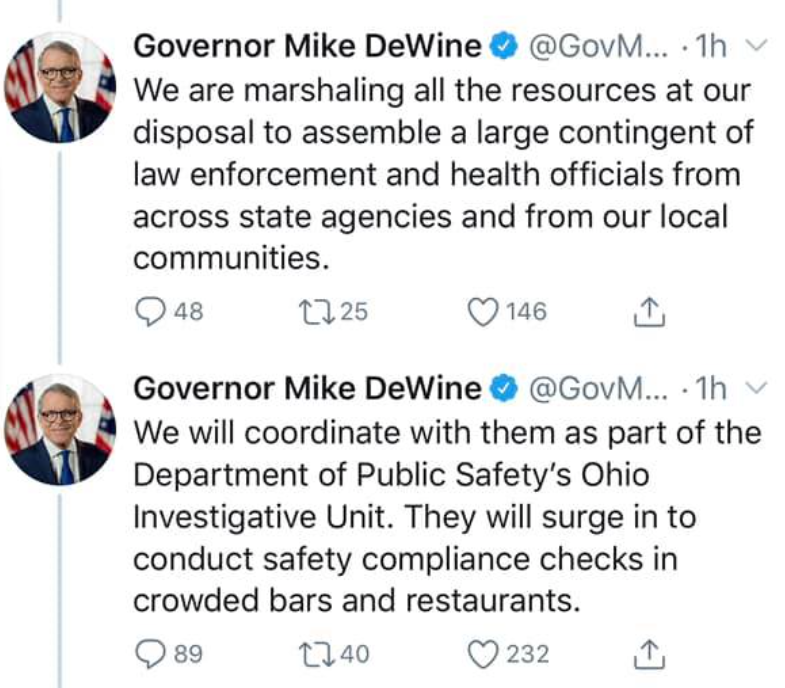
“When the Governor comes out and uses the words ‘marshal’ and ‘surge’ and ‘criminal prosecution’ when referencing his restaurant and bar police going after these establishments as they try to carefully and safely reopen is really unjust and uncalled for.”

Cross said that while there is a necessity for safety regulations and consistency, there is a lot of confusion around them and Ohioans do not need to be marshaled and policed.

“I am putting the state of Ohio on notice,” said Rep. Jon Cross. “If you’re going to go bully our small businesses owners, I’m going to be there to defend them and protect them, as they try to reopen while adhering to rules set forth by the Governor.

“We’ve got to be helpful, thoughtful,” said Cross. “Clarity is needed, and a positive and energetic attitude. We don’t want people to be fearful. We want people to open up safely and with confidence.”

DeWine said more workers are being summoned to supplement the 70-member state Investigative Unit that polices liquor laws, to check virus-precaution compliance at bars and restaurants.

Local officials will work with the pandemic patio patrol as well, with the governor not immediately able to place an estimate on the increased numbers that will enforce the state’s regulations.

Violation of a public health order during a pandemic is punishable as a second-degree misdemeanor carrying up to 90 days in jail and a $750 fine.

Cross said most of the law enforcement personnel he’s spoken with say that they are just as frustrated as everyone else. “Our law enforcement wants to be protecting our public. They don’t have time to go around and deal with the Governor’s administrative codes.”

Cross said that small businesses make Ohio competitive, and to put them under would only harm the state.

What’s more, Cross said, “We don’t need to add to the pain and suffering of these small business owners that are already hurting after a shutdown of 60-plus days.

“I’ve never seen anything like this before,” said Cross. “I’m glad I’m in the position I am because now is the time you’ve got to step up and fight and defend.”

Cross has become a folk hero to Ohio’s small business owners and to those who believe in less government control. His commitment and common-sense approach have attracted a following to his Facebook page.

Facebook: State Representative John Cross, 83rd House District

Rep. Cross (R-Kenton) and a Rep. Shane Wilkin (R-Hillsboro) recently introduced the Business Fairness Act, HB 621. In short, the bill would allow small businesses to remain open in times of crisis, just like big box stores, such as Walmart and Costco.

Said Cross, “When bureaucrats and deep state government officials get out of line and try to go around the legislative body, that’s when we have to step up and be tough. We do this by passing thoughtful and carefully crafted legislation.”

Cross said that one of the main goals of the Ohio House is to keep Ohio’s small businesses alive and thriving.

“We are trying to be helpful and to provide positive leadership,” said Cross. “That’s how you get your state turned around.”

Cross plans to be at Indian Lake over Memorial Day weekend, after a tip that local establishments there will be the target of DeWine’s policing unit.

Cross said in a social media post: “I look forward to meeting with Indian Lake Restaurant & Bar owners on Friday. I’m hearing that Governor Mike DeWine’s “restaurant/bar police” will be targeting Indian Lake!

“Thank you for the invite Indian Lake Chamber! I’m proud to represent (parts) of Indian Lake, a real gem for Ohio. AND I’ll continue to fight like hell not to let DeWine’s police squad threaten or bully our small business owners!

“I’m watching your actions Logan County Health District!”

State Representative Jon Cross (center) with small business owners Matt Brown and Brett Wiford of Iron City Sports Bar on their one-year anniversary of opening in October, 2018.

BREAKING NEWS: Judge Says Gyms Can Reopen

BREAKING NEWS:
Judge orders Immediate Reopening of Gyms and Fitness Centers

Judge Eugene Lucci CALLS OUT Gov. DeWine and Dr. Amy Acton

Today a lawsuit filed by Finney Law Firm, LLP and the 1851 Center forced the reopening of gyms and fitness centers in Ohio.

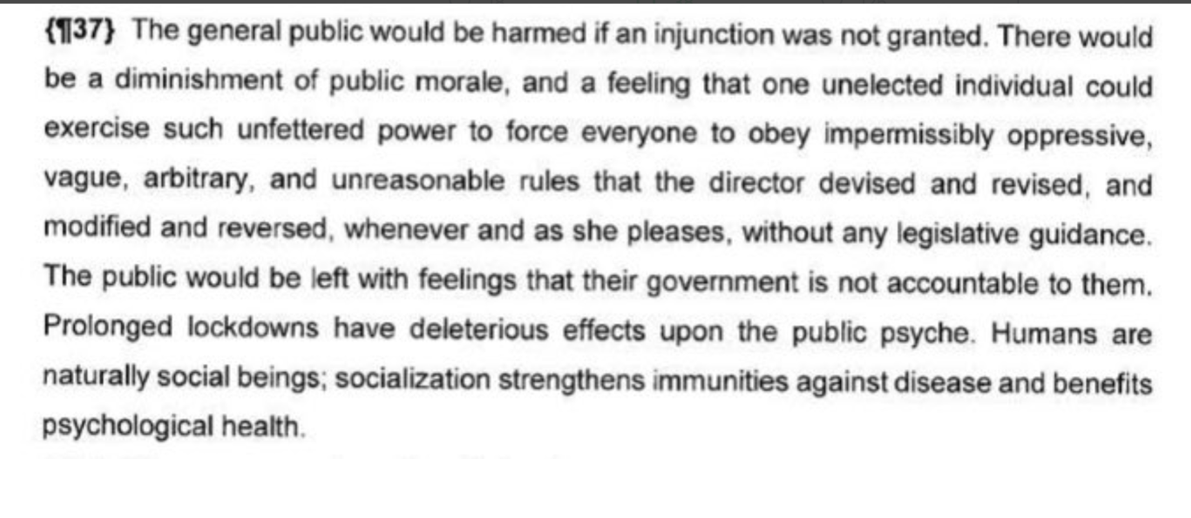
Lake County Common Pleas Judge Eugene Lucci provided the following powerhouse statement regarding his decision.


It appears this decision will make it difficult if not impossible for Dr. Acton to implement forced closures in the future.
The Ohio Legislature is working on a legislative remedy that would limit the powers currently afforded to the Director of the Department of Health. Should the legislation pass the Health Director would be able to shut down the state for 14 days and then seek legislative approval for any additional actions.

Not All Heroes Wear Capes … This One Is in a Hospital Gown

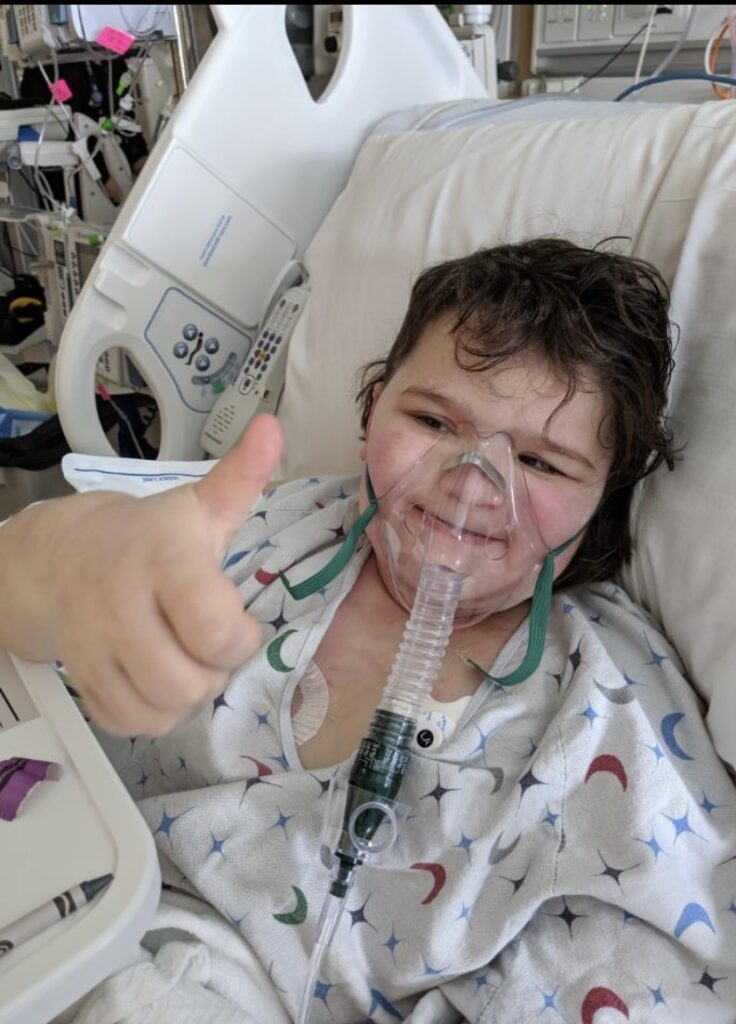
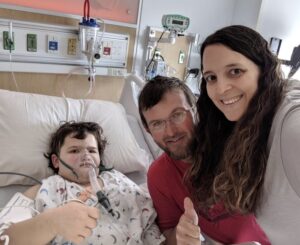
Senate President Larry Obhof stepped up to help the Wehr family, so both parents could be with Autumn in the hospital ICU.

The plight of a little girl with an aggressive form of brain cancer helped to bring about tremendous positive change for thousands of sick children throughout Ohio and neighboring states.

Seven-year-old Autumn Wehr has both parents with her today at Nationwide Children’s Hospital in Columbus, after the hospital lifted a ban that permitted only one visitor per 24-hour period.

Autumn’s ordeal drew attention to the one-visitor regulation that many considered unnecessary and cruel, as it meant that only one parent could be with a hospitalized child.

Autumn was admitted to the hospital last Saturday with a prolonged seizure and placed on a ventilator. Only her her mother could be with her, while Autumn’s father was not permitted inside. Autumn was listed as critical.

She is the daughter of Carrie and Bradley Wehr of Jerusalem, Ohio.

Autumn’s family sent out a plea via social media, asking for help from the public and from Ohio representatives.

Senate President Larry Obhof heard about the family’s plight and intervened on their behalf, asking the hospital to allow both parents to be permitted in the room, considering Autumn’s grave condition. On Sunday both parents were allowed to be with their child. But when Monday came, the father was again unable to get in the hospital.

Autumn pictued with both her parents on Sunday after Senate President Larry Obhof reached out to the hospital on the family’s behalf.

“There are literally families camped out in chairs in the parking lot because that is the only way they can be here together,” said Carrie in a Facebook post on Monday.

Carrie said she did not simply want an exception made for her family, she wanted the rules changed for everyone.

The hospital’s new policy took affect today. It says that all inpatients will be limited to two visitors in their rooms. The visitors cannot change during the child’s stay, and they must be healthy and over the age of 18.

Visitors will undergo temperature screens and will be provided a hospital-grade mask to wear for the duration of the visit, according to Children’s website.

Autumn has been fighting cancer since she was a baby.

Calls to Children’s media line were not returned before this article was published.

Autumn Wehr

Parents of Terminal Child in ICU Kept Away; Family Pleads for Help

The oft-used slogan “All in This Together” rings hollow for the family of this terminally ill child.

The parents of child with a brain tumor are pleading for Gov. Mike DeWine to allow them to be together at their daughter’s bedside at Nationwide Children’s Hospital in Columbus.

Seven-year-old Autumn Wehr was admitted to Children’s with a prolonged seizure and was placed on a ventilator for support. The hospital permits only one parent to be with a child each 24-hour period due to orders from DeWine, the family was told by hospital admitting staff.

Autumn is currently in the ICU. Her mother, Carrie Wehr, is with her.

“Meanwhile, her father Bradley is sitting in the parking garage barred from entering the hospital and being by his daughter’s side,” said a post by the family on social media.

Autumn’s parents were advised that the hospital guest restriction policy was implemented as a result of orders from the Governor. They were told that the hospital would need word directly from the Governor’s Administration in order to make an exception.

The family has gone to extraordinary lengths to contact DeWine to have the order lifted, at least temporarily. But their pleas have so far gone unheard. They posted on social media asking the public to send emails and make calls to the governor on their behalf.

“Your policies are stripping Autumn’s father of his rights as a parent and forcing her mother to go through the worst possible trauma all alone without support,” a family member stated in the post.

Please say a prayer for little Autumn Wehr and her family.

Below is the plea for help that Samantha “Sam” Jeffers, a relative of the family, posted Saturday evening on Facebook.

Autumn Wehr with relative Sam Jeffers, who posted on social media to get help for Autumn’s family. Autumn is in critical condition at Nationwide Children’s Hospital in Columbus, Ohio.

“We are writing to you on behalf of the family of Autumn Wehr.
We are concerned in getting some answers regarding the pediatric hospital guest restrictions at Nationwide Children’s Hospital in Columbus, Ohio. 7 year old Autumn has brain cancer and has been in treatment for over 6 years accompanied by numerous other medical conditions. Autumn, with the support of her mother Carrie, is currently in the Nationwide Children’s ICU for a prolonged siezure lasting over 2 hours and has been placed on a ventilator for support.
Meanwhile, her father Bradley is sitting in the parking garage barred from entering the hospital and being by his daughter’s side. The hospital policy currently states that only one parent is allowed at their child’s bedside. We would like to do something to change that.
Nationwide Children’s Hospital advised us that those orders are set by your office. We have also been advised that if Autumn’s mother were to leave and allow her father to visit, she would not be allowed back for with her daughter for 24 hours. The family was informed that if Autumn were to be dying, they would need special permission from your office and/or the hospital CEO to allow both parents to be with her while she passed. Allowing both parents at bedside to support their 7 year old daughter is not an unreasonable request.
These regulations are not only unacceptable, but also preposterous. Autumn and her family have been life-long patients of this hospital and have indicated that they feel it is already at an all-time low patient capacity. In a time in which the country is supposed to be “In this together”, the regulations set forth by your office are separating Autumn and her family. Your policies are stripping Autumn’s father of his rights as a parent and forcing her mother to go through the worst possible trauma all alone without support. Carrie was offered a member from the chapel to be with her as a support, however that not only adds to the traffic in Autumn’s room, but also exposes Carrie and Autumn to a new person that they do not know. Autumn has tested negative for COVID-19 and before hospital admission, Carrie and Autumn were safely quarantined at home with her father.
Therefore we say again, the ruling to exclude one parent from their child in a time of need is unbearable. We plead to you as parents, families and Ohioans to put yourself in Carrie and Bradley’s shoes and imagine how you would feel. We also plead for you to put yourself in Autumn’s shoes, fighting for your life without your father by your side to comfort you through your last moments of life. The Wehr family is unfortunately looking ata long admission with their daughter and we are writing in hopes that you reconsider these policies, not only for Autumn and her family, but for all of the other families impacted by your decisions. So we ask, please abandon these policies and allow both parents to be there for their child to help her fight the greatest battle of her life.”

Workforce is Called back but Childcare Remains Closed Until May 31

Lack of childcare does not excuse an employee from returning to work when called.

Ohioans are being called back to work this week as more and more businesses reopen, but childcare will not be available to working families until Sunday, May 31, at the earliest.

Gov. Mike DeWine announced that daycares will be allowed to reopen, but they won’t be the same as before. Class sizes will be significantly reduced, and other mandatory policies and practices must be in place. Infants and toddlers will be restricted to six per room with a maximum of nine permitted per room for older children. Masks and other precautions for staff members will be a requirement.

DeWine said more details on those requirements will not be made public until Friday.

State Representative Susan Manchester is calling for the governor’s administration to make reopening childcare a priority so that Ohioans can return to work with confidence that their children are being cared for and safe.

Most childcare providers are fundamentally small businesses. It is unknown how many will decide not to come back after being closed for over nine weeks. Daycare services operate on a narrow profit margin and some may decide that reopening is futile.

For those do reopen, it will be necessary to significantly increase rates due to smaller class sizes. This will hit families at the lowest income levels the hardest.

The childcare sector, which was already fragile and in need of strengthening and expansion, now appears it will be weakened further and may be inadequate to meet demand and unaffordable to lower-income families.

This will undeniably put added stress on Ohio’s working families.

“We know that Ohio’s childcare providers will need assistance as they reopen,” said DeWine.

He said Ohio is utilizing more that $60 million in federal dollars through the CaresAct funding to provide reopening grants to Ohio’s childcare providers. DeWine said these grants will be available to both public and private daycares for two to three months. More information will be posted on the state website.

DeWine announced that summer day camps can reopen on May 31st as well if they can meet safety protocols. Protocols will be released by the end of the day tomorrow.

Rep. Manchester urged the administration to form a workgroup devoted to planning for statewide access to childcare. “As Ohioans return to work, working parents need immediate access to reliable, safe and quality childcare,” Manchester said in a letter to the governor’s administration.

“Childcare programs already adhere to strict cleanliness and disinfecting standards and have indicated their willingness to comply with any additional requirements deemed necessary,” the representative said.

Lack of childcare is not a valid excuse for not returning to work, according to the state. Businesses have reportedly been told to report employees to the unemployment office if they refuse to return to work so that benefits to those individuals can be stopped.

Former State Representative Andy Thompson Dead at 57

We are very saddened to learn that Andrew “Andy” Thompson, former member of the Ohio House of Representatives, died suddenly today. Thompson represented District 95 from 2011 to 2018. He was unable to run for re-election due to term limits.

Thompson also served on Marietta City Council since 2005 and was co-publisher of his family’s magazine, Bird Watcher’s Digest. He was Eastern Ohio Development Director for Appalachian Ohio.

Thompson was married to Jade Thompson and the couple resided in Marietta. He was 57.

Thompson was a great conservative who cared deeply about all of his district and especially his home of Washington County. Those who knew Thompson say he was kind, generous and authentic. He will be missed.

When Will DeWine Authorize Childcare to Reopen so Parents Can Return to Work?

Parents of young children and owners of childcare centers are anxiously awaiting word from Gov. Mike DeWine on when or if day cares will be allowed to reopen.

With over 90 percent of the economy authorized to reopen by week’s end, parents are left hanging with no direction from authorities on what to do for childcare.

Last week DeWine said he would make an announcement on Monday regarding childcare. When Monday rolled around, DeWine said more time was needed to study the issue.

Barbers, salons and spas will reopen Friday and restaurants will be allowed to offer outdoor dining. But still no word from the governor on what parents are to do with their children.

Some think the reason for the delay is that health officials are looking for a link between Kawasaki’s Disease and COVID in children. So far, this is simply a theory and not backed up by any scientific data.

The majority of studies indicate that children are less susceptible to the virus. Children also have been found not to spread it, even when they do become infected. Essential workers have had childcare available to them all along with no spread of the virus being reported.

While lack of childcare leaves parents in a lurch, childcare centers themselves are becoming increasingly desperate, saying their small businesses are on the verge of collapse. Most childcare centers are private businesses, with ongoing rent and utility costs. The majority have had little to no income throughout the course of the shutdown.

What’s more, childcare centers will likely face additional expenses as they prepare to fully reopen, with social distancing requirements that will limit the number of children they can serve, reducing their revenue. Home-providers are not available for state unemployment benefits because they are classified as independent contractors.

It is hoped that DeWine will authorize childcare centers to reopen along with other Ohio small businesses.