
Children Face Global Poverty; U.S. Protestors Want State Bans Lifted, Return to Work

The downturn of the global economy could kill hundreds of thousands of children, the U.N. warned on Thursday. Millions more could fall into extreme poverty as a result of the crisis.

Photo Credit: Cleveland19.com

Children have been largely spared from the most severe symptoms of the coronavirus but the resulting economic impact and hardships may not be so kind.

The poorest and most vulnerable members of society are being hardest hit by the pandemic response, said a recent report released by the United Nations.

“I appeal to families everywhere, and leaders at all levels: protect our children,” said U.N. Secretary-General Antonio Guterres. “Leaders must do everything in their power to cushion the impact of the pandemic.”

An estimated 42 million to 66 million children could fall into extreme poverty as a result of the coronavirus crisis this year, adding to the estimated 386 million children already in extreme poverty in 2019, according to the U.N.

With the global recession gaining momentum, there could be hundreds of thousands additional child deaths in 2020, Guterres said.

“With children out of school, their communities in lockdown and a global recession biting deeper, family stress levels are rising. Children are both victims and witnesses of domestic violence and abuse.”

The report also points to an increase in extreme poverty this year of 84 million to 132 million people. Approximately half of those 132 million people are children.

“Let us protect our children and safeguard their well-being” said Guterres.

Growing number of Americans say it’s time to lift restrictions and return to work

Meanwhile, President Donald Trump and a growing number of Americans say it is time to relax restrictions on the economy and lift stay-at-home orders.

“WE CANNOT LET THE CURE BE WORSE THAN THE PROBLEM ITSELF,” the President tweeted.

Some 6.6 million Americans reportedly filed for unemployment insurance last week. This was double the previous record, which was set only the week prior. Analysts are predicting that GDP could shrink by double-digit percentages this quarter.

With businesses shut down and more than a billion people told to stay home to avoid spreading the virus, the International Monetary Fund has predicted the world would this year suffer its steepest downturn since the Great Depression of the 1930s.

“Keeping businesses’ doors completely closed will have huge costs,” said Jonathan Caulkins, a professor of operations research and public policy at Carnegie Mellon University’s Heinz College said in a Politico interview. “Given this possibility, we need to figure out how to work sustainably in this new reality.

Caulkins said keeping Americans safe doesn’t require shuttering all jobs.

“It does, however, require re-thinking how people do them. There’s a large swathe of jobs, somewhere between essential and optional, that could be reengineered to allow many to get back to work soon and safely.”

Multiple states have seen protests as stay-a-home orders and restrictions continue. Many protesters are angry about the economic ramifications the restrictions are causing.

Governors of about 20 U.S. states have indicated they may be ready to start the process of reopening their economies by President Donald Trump’s May 1 target date. Others have said that they intend to continue imposed lockdowns.

Protestors gathered outside the Minnesota governor’s mansion on Friday to defy stay-at-home measures instituted by Governor Tim Walz. The demonstration was organized by anti-lockdown group Liberate Minnesota.

The day before, demonstrators in Virginia gathered outside the state capitol building in Richmond to protest Governor Ralph Northam’s stay-at-home order. And, earlier in the week, thousands of Michigan residents blocked traffic in Lansing, the state capital.

In a series tweets on Friday, Trump said: “Liberate Minnesota!” “Liberate Michigan!” “Liberate Virginia!” and said the 2nd Amendment was under siege.

A growing number of Ohio legislators are calling on Gov. Mike DeWine to lift restrictions and allow Ohioans back to work.

DeWine stated last week that he will begin implementing a plan beginning May 1 to slowly reopen the state in stages, but did not elaborate.

“Is it the government’s job to extend my life or is it the government’s job to protect my liberties and freedoms?” Rep. Nino Vitale said in letter to the governor, calling on him to allow surgical centers to reopen and medical personnel to return to work.

Churches suing state governments for banning worship gatherings

Churches and their leaders in states across the country are suing governors for COVID-19-inspired orders that they say are infringing on their right to worship freely.

In Kentucky, Maryville Baptist Church and its pastor sued Gov. Andy Beshear (D) in federal court for the “unconstitutional application of the gathering orders,” claiming he “targeted” churchgoers who gathered on Easter Sunday for the only in-person service in the state.

A few of those churchgoers filed their own lawsuit earlier in the week, after receiving notices in the mail that they need to self-quarantine for 14 days. They were identified by their license plates in the church parking lot.

In the new lawsuit, the church and pastor, Jack Roberts, expressed outrage that church gatherings were not categorized as essential services in the state, while institutions like “liquor stores” were.

In Texas, a number of pastors, churches and conservative activists are suing Gov. Greg Abbott (R) and Attorney General Ken Paxton (R) for similarly constraining their religious liberty.

“The Texas Constitution guarantees our God-given unalienable rights to worship, to peaceably assemble, and to move about freely without unconstitutional restrictions on one’s egress and ingress,” the lawsuit, noted by a Houston Chronicle reporter, said.

“None of these rights is contingent upon our health status or subject to the limitations Governor Abbott is attempting to impose on those rights.”

Legislative Profile: Cindy Abrams

State Representative Cindy Abrams is serving her first term in the Ohio House. She represents the 29th Ohio House District, which includes portions of western Hamilton County.
Abrams previously served as a Police Officer for the City of Cincinnati and as City Councilwoman for the City of Harrison before being appointed to the 29th district seat.
Abrams received her Bachelor’s degree in Criminal Justice from Indiana University and is a graduate of the Public Leadership Academy of The Ohio State University.
She served on the boards of the Hamilton County Emergency Management & Homeland Security Agency, Hamilton County Municipal League, and SHELeads. Active in the Hamilton County Republican Party, Abrams serves on the Hamilton County Judicial Screening committee. Additionally, she established the Harrison Junior City Council Program.
Abrams resides in Harrison, Ohio with her husband and their two sons. They are active members of St. John the Baptist parish in Cincinnati.

Why did you become involved in government? I first became involved in government at the local level when I saw decisions being made that negatively affected our first responders and citizens safety. I knew the importance of getting a “boots on the ground” perspective when considering policy changes in order to get a holistic view of how the entire community will be affected. With my law enforcement background, I wanted to be a voice for my community by serving on Harrison City Council. Now, with years of both public and private sector work experience, I bring a new perspective to the Ohio House.

What are your legislative policy priorities or goals for the upcoming session?
As a former police officer, keeping people safe at all times will always be a priority of mine and is reflected in the legislation I sponsor and support. I’ve introduced
House Bill 429: Expanding the Safe at Home Program to help protect victims of domestic violence, rape, menacing by stalking or human trafficking and HB 431: Creating a Sexual Exploitation Database, this will be a public database of individuals who have been convicted of solicitation or promoting prostitution.
I am also focused on economic development and keeping jobs in our region. I was appointed to serve on the House Commerce & Labor Committee, which allows me to consider legislation that does just that.

What surprises/unexpected challenges did you encounter when you started?
It has been a smooth transition since being appointed in October. I have learned largely, in a short amount of time, about a wide variety of topics that impacts all 11 million Ohioans.

How do you stay in touch with your district?
I work hard to continue to be accessible to my constituents. I hold office hours in varying locations around my District. I also visit each City, Township and Village meeting in my District to connect with local elected officials. I attend various club/organization meetings and events in the Greater Cincinnati area. I post regularly on my Facebook page, State Representative Cindy Abrams. It’s very important to me to be accessible and communicate with my constituents.

What is the most interesting/unusual request from a constituent?
I found it odd when people email my office asking me to vote on legislation being considered by Congress in Washington, D.C. Since I serve in the Ohio House of Representatives, I only vote on legislation that comes to the House Floor in Columbus Ohio.

What are some of the attractions or hotspots in your district?
District 29 has MANY attractions and hotspots! We have options for enjoying the great outdoors in one of many Great Parks of Hamilton County locations. My favorite Great Parks location is Miami Whitewater Forest.
Want a great cup of coffee or tea? Try the Coffee Peddlar in Harrison, Sayler Park Coffee in Sayler Park or BLOC Coffee in Price Hill. How about a delicious dessert? Harrison Home Bakery in Harrison or St Lawrence Bakery in Price Hill. Some of my favorite restaurants are Incline Public House, Primavista, Veracruz Mexican Grill - all in Price Hill. I also love the Sweet Heart Cafe in Colerain Township, Market Street Grille, Valle Escondido, ElMariachi’s and Chander’s Burger Bistro in Harrison. Kreimer’s Bier Haus in Cleves offers a great menu and outdoor entertainment when the weather is nice. Wild Mike’s is always a family favorite! We enjoy the riverfront view at Cabana on the River (seasonal hours). Date night with an adult beverage? 1860 Taproom and Bottleshop or Heist & Co. in Harrison, or 13 Below Brewery in Cincinnati.

Ohio is so diverse, what are the primary challenges you’re facing?
Ohio is so diverse that what might be a priority for one area might not be in another area of the state. That is why communication is so important! We must always stay in touch with our constituents, listen to what is important to them and make decisions based on what is best for your District.

Restrictions Will be Lifted Beginning May 1; Bob Ney Weighs-in on Reopening

Former U.S. Congressman Bob Ney shares his thoughts on plans to reopen Ohio

Now that there’s talk of reopening the state by Gov. Mike DeWine, Ohioans may be wondering how the process of reviving the economy and lifting restrictions will take place.

DeWine said Thursday that this is “the end of the beginning stage of the COVID 19 pandemic,” and that a phased-in reopening of the state economy and gradual lifting of restrictions will begin on May 1.

He said the plan will be fact-driven over a long period of time.

The governor said he received a verbal report from his board of economic advisors on how to best approach restarting the economy. The group consists of economic advisors from all sectors of Ohio, according to DeWine.

DeWine will be working closely with the governors of Illinois, Michigan, Wisconsin, Minnesota, Indiana and Kentucky in order to reopen the region’s economy in a coordinated way, he said.

The state has been on lockdown since March 24. Only essential services have been allowed to remain open.

Former U.S. Congressman Bob Ney said he would anticipate that medical facilities would receive top priority and open first.

“These facilities should definitely start to return to normal, with precautions,” said Ney, who represented Ohio’s 18th congressional district in the U.S. House of Representatives. “Otherwise, a lot of medical conditions are going to develop, and I think you could find plenty of examples of those.”

Ney said he looks for state leaders to initiate a slow but progressive reopening of the state. “You can’t just throw a switch and open everything back up immediately, but it can be opened in stages over a shorter amount of time.”

Ney said that, going forward, the state needs to combine practicality with medical science, while stressing the importance of distancing.

“At some point in time, if this goes on too long, a lot of repercussions are going to occur with people’s mental health, drugs and alcohol, economic stress, or so I would think,” said Ney.

Some are concerned that outpatient clinics and surgical centers have already been closed too long and that it has taken a medical toll on Ohioans. State Rep. Nino Vitale recently sent a letter to DeWine calling for these facilities be opened immediately.

Vitale said the state needs to be gravely concerned about health and welfare issues that are not C19 related, such as heart and lung problems, and numerous other medical issues that have gone untreated due to the lockdown. He said surgeries that were once considered elective have escalated and thousands of Ohioans are suffering.

Ney praised DeWine for decisions made during the COVID crisis but said that it’s time to begin the process of reopening the state.
“I think the governor did some things that he had to do,” said Ney. “I think he did a really good job. Now there has to be a process of trying to get back to some semblance of normalcy.”
Ney said it’s likely that the executive branch will make most of the decisions regarding reopening. He said he would expect that the legislators would be asked to weigh-in as well.

Ney said that he recently drove through the parking lot of the Cardiopulmonary Rehab Facility near Licking Memorial Hospital in Newark where he received cardiac therapy after suffering a heart attack a year ago and was surprised to find it nearly empty.

“It was empty in the middle of the day,” said Ney. “My question would be, are they doing cardiac rehab? That’s not a selective thing. I mean, that lot used to be full every single day from 8 a.m. to 4 p.m.”

A staff member who answered the phone at the facility said it is closed to outpatients due to the coronavirus.

“The (Licking Memorial) hospital is empty in comparison to what it used to be, so I think that the big preparation for that hospital to be filled with coronavirus is not going to happen,” said the former congressman.

If the Coronavirus Has Your Hair in Crisis… Here’s What NOT to Do

If you’re thinking about cutting your own hair during home confinement, be warned. There’s a good chance you will end up with a dreaded #CoronaCut.

Hair salons are considered nonessential in the eyes of the state. Most have been closed for at least three weeks. By now, vanity could be getting the best of you as you contemplate a DIY doo.

But hair pros say don’t do it! Patience, in this case, truly is a virtue. Wait for salons to reopen.

Matthew Rodinsky, a hairdresser at Cirque de Cheveux, in Wheeling, WV, advises folks to “embrace” their isolation hair. He compared cutting your own locks with the kitchen scissors to fixing a toothache with a drill from the garage.

“Cutting your own hair is only going to make it worse for your hairdresser to fix and it will cost extra money,” said Rodinsky. “You’re still not going to be happy because it’s not going to be an instant fix.”

This advice may come too late for those who have already taken matters into their own hands. The good news is, there’s still time for your DIY hair cut to grow out (at least a little) while home-isolation is still in effect. Or you could voluntarily extend home quarantine if vanity deems it necessary.


Some people seem to defy all odds and end up with nice hair despite it all.

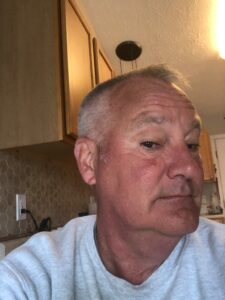
Greg Reinhard gave himself a top-notch clipping and looks very pleased with his handiwork. Not bad for an amateur!

Not everyone is as good with the clippers as Reinhard though …


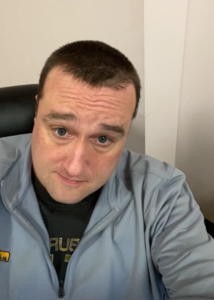
Craig Brown said his wife “laughed maniacally” after giving his locks a going over with the electric clippers.

Apparently, the basic crew cut isn’t as basic as she thought. Brown’s hair had more of a bi-level look when his wife was finished.

Brown was a good sport about it.


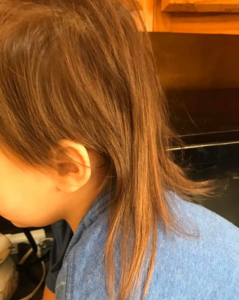
It’s hard to know for sure what Jasmine Ervin’s two-year-old daughter had in mind for a doo when she began cutting away with safety scissors.

The aspiring cosmetician was stopped mid way when mom intervened. The little one was left with a partial mullet, much to mom’s dismay.

This is something that Valerie Geibel-Wells could normally fix. Geibel-Wells owns three Ohio locations of Cookie Cutters Haircuts for Kids. She said her clients are begging her to reopen and she expects to be very busy when that happens.

In the mean time, she discourages DIY hair cuts and urges her clients to be patient.

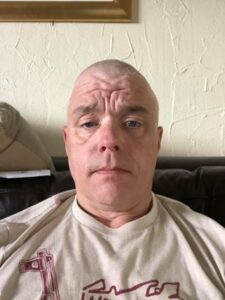
Instead of waiting around for his barber to return to work, JT Todd took action recently and buzzed his own hair.

When Todd realized he didn’t own hair clippers, he borrowed his dog’s.

He may have gone a little shorter than he wanted. Thankfully, Todd doesn’t plan to take up professional dog grooming anytime soon.


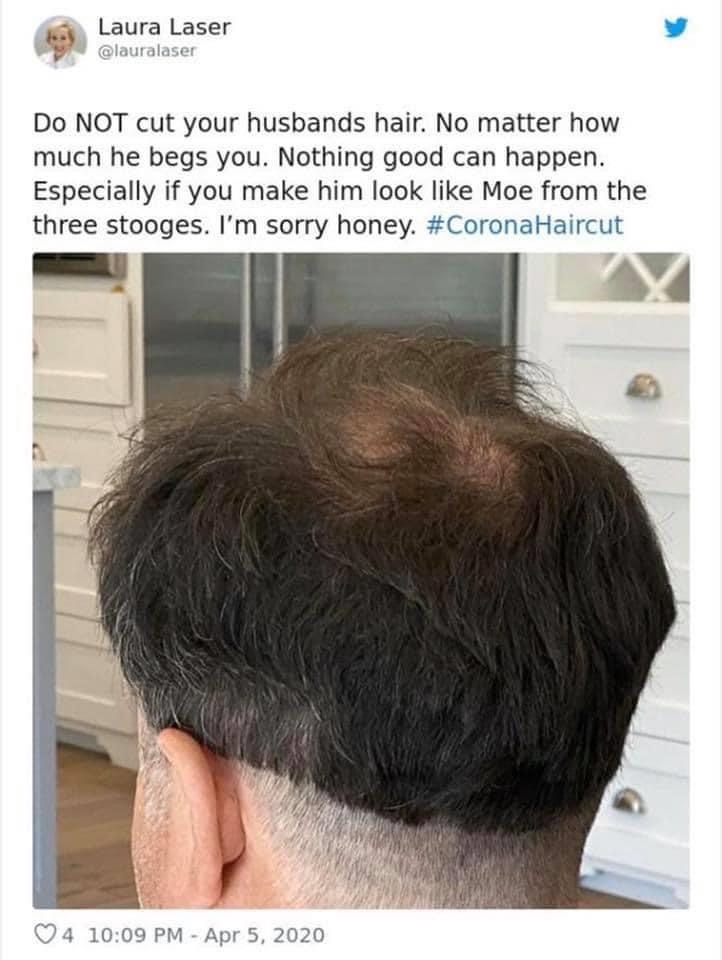
Laura Laser has some advice for women whose spouses are pressuring them to cut their hair.

“Do NOT cut your husband’s hair. No matter how much he begs you. Nothing good can happen. Especially if you make him look like Moe from the Three Stooges. I’m sorry honey.” #coronaHaircut

A brand new, bolder hair color may feel like just what you need to ride out the COVID crisis. But take it from Glenda Lynn Gambill, normally a blonde bombshell, hair color from a box can be tricky. You don’t always end up with the color displayed on the package.

Gambill was none too happy when the auburn dye turned her mane candy apple red. Weeks later, she’s still trying to tone it down.

Ohio Statehouse News guest writer Del Duduit oiled up his clippers and ended up with a decent buzz cut. It’s unknown if this was due to luck or skill, and Duduit claims the view from the back is as snazzy as the front. We will take his word for it.

If you’re counting on the Flowbee to save your hairstyle during the Corona shut down, it will cost you a pretty penny. Apparently they’re selling like there’s no tomorrow and the price has skyrocketed.

The Flowbee used to cost $45 to $50, but is now listed at $134.99 on Amazon and $149.95 on eBay.
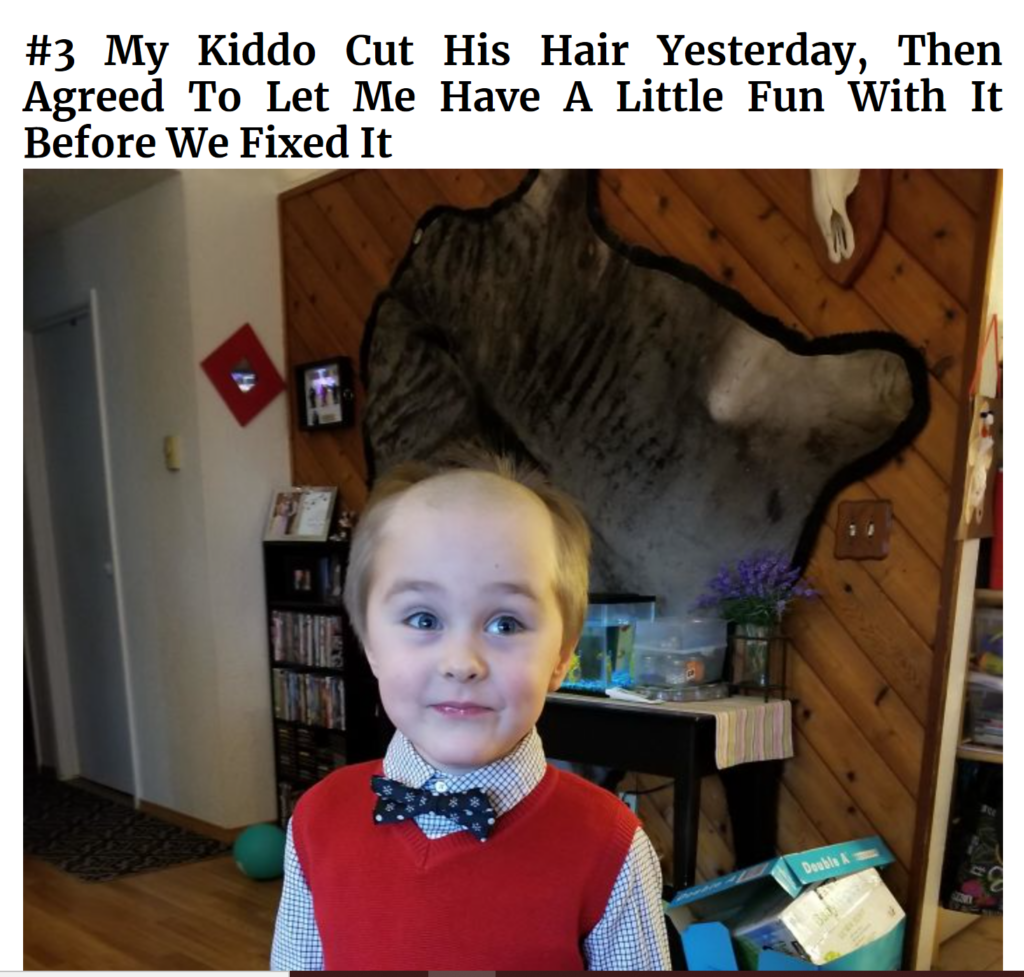


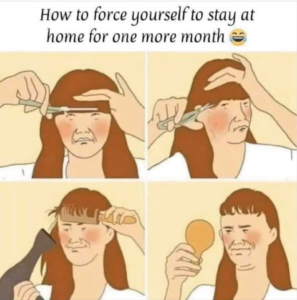
Last, but not least, if you really flub up a #coronacut, you may as well have some fun with it. This little guy was a good sport and allowed his mom to age him forward half a century. What a cutie pie.

Lawmaker Calls on DeWine to Reopen Surgery Centers; Thousands of Ohioans in Medical Crisis

An Ohio representative is calling on the governor to reopen surgical centers and allow medical personnel to return to work so that Ohioans can get the health care they desperately need.

In an immediate call to action directed at Gov. Mike DeWine and Ohio Health Director Amy Acton, State Representative Nino Vitale said, “We cannot be so focused on one pandemic that we create three to five other health care pandemics.

“We should also be gravely concerned about the health and welfare of people who have heart problems, lung problems, colon issues, prostate or bladder surgeries, and other conditions that are not C19 related,” said Vitale.

Numerous pleas for help from constituents prompted the legislator’s email correspondence to DeWine and Acton, which was sent on April 10 but has not yet received a reply.

“There are many people waiting for surgeries that were once considered elective but have escalated into more serious issues, even critical issues,” said Vitale. “Most of these are done in outpatient surgical centers that have been shuttered.”

Vitale (R-Urbana) is serving his third term in the Ohio House and represents the 85th House District.

Read Vitale’s letter to DeWine and Acton here.

The state has been on a stay-at-home order since March 24. Medical professionals have not been told when they will be permitted to go back to work.

Vitale and some other lawmakers are starting to pressure DeWine to reopen parts of healthcare and the economy.

“We need to address the thousands of people that are really going off the deep end because of pain, cancer and other medical threats they need treatment for,” Vitale said.

Vitale said he has been contacted by general practitioners, orthopedic surgeons, a urologist and physical therapists asking when the order will be lifted, as there are patients that are being denied surgery, medical procedures, physical therapy and other medical care.

The mental health of some Ohioans is also becoming an issue, said the representative.

“When someone’s mental health starts to fail that has a presence on their immune system and this has been a really challenging time for a lot of people,” said Vitale.

Vitale said his constituents have turned to him, their government representative, for help.

“To some degree, we are pretty helpless because the governor and department of health have decided that they are going to do these things without any input from anyone else,” said Vitale. “I think that’s a dangerous place to put people in when we live in a representative republic where we expect people to represent us.”

In addition to putting the health of Ohioan’s at risk, Vitale said that the state risks losing its physicians.

“I also have doctors telling me that they have lost 85 percent of their practices and are either days or a week or so away from closing their doors permanently,” Vitale stated in the letter.

Vitale said that making health care unavailable to Ohioans is dangerous and unnecessary.

“What the doctors and nurses have told me is, ‘We are trained in disease mitigation. That’s what we do.’ To cite the spread of the coronavirus as a reason for not allowing them to work is not what we need.”

Vitale said he has been told by medical professionals there is plenty of room in hospitals.

“The hospital beds are empty. We have plenty of capacity. Word is that they are laying people off. They are laying off nurses and staff.”

Vitale said additionally there are people who had surgery before the stay-at-home order but have been unable to receive the aftercare that they need, like physical therapy.

Baldridge Sees Need to Expand Broadband Access

State Representative Brian Baldridge (R-Winchester)

By Del Duduit

Ohio State Representative Brian Baldridge has a unique perspective on the COVID-19 pandemic that has shut down most of the nation, including his state.

Baldridge, a Republican from Adams County, is not only a legislator in his first term, but he is also a firefighter and paramedic. He was a four-term county commissioner and was in office during the national economic downturn in 2008. His experience, he believes, will guide him to help his constituents get through this current situation.

Ohio Gov. Mike DeWine was one of the first in the nation to shut down his state and is being credited with getting ahead of the virus that has spread all over the world.

But as a result, many people have had to close their businesses, and the numbers of people filing for unemployment have skyrocketed.

“This is certainly new territory,” he said on Good Friday. “But we did see how the economic recession in ‘08 affected our communities. For some, it was devastating. When we get past this, we know how to work with local governments to help them and better assist our citizens.”

Baldridge represents the 90th District, which includes all of Adams and Scioto and a portion of Lawrence County. He was appointed by the Ohio Speaker of the House to serve on the Economic Recovery Task Force and will examine ways to help Buckeyes get back on their feet as soon as possible.

“We will discuss the economy with business owners and leaders and find a new direction to help bring everyone together and help each other,” he said. “This is our opportunity to move forward to help local communities and businesses lift themselves out of this financial problem.”

From a first responder standpoint, Baldridge said he is more aware than ever about making sure he takes precautions to protect himself and his family and friends.

“This is a very serious time in our nation, state and community,” he added. “This pandemic has changed me and how I do business. I am more safety cautious, and I make sure that I don’t wear the same clothes I had on at the fire department at home. When I make my transition toward home, I disinfect and make sure I don’t bring anything potentially dangerous to anyone.”

Schools in the area remain closed, and students are either learning online or from their parents. One area Baldridge said he will focus on as soon as possible is to put an emphasis to make broadband available to all Ohioans.

“A lot of my district is rural, and there are some people who don’t have access to broadband,” he said. “A big portion of my district has people who are off the grid and cannot work at the same speed because of this, and it’s not a good situation. We don’t want anyone to fall behind because they don’t have broadband, especially students and people who are encouraged to work from home.”

School districts are doing all they can to ensure students have what they need to complete assigned work, he added, but they are limited if there is no broadband access.

“Many districts are providing hard copies to students, and that’s great because they are doing their best,” he said. “But every student needs broadband access, and we are going to look at this issue right away.”

He added the current situation is a trying time in Ohio and the nation, but it’s also a good opportunity to connect with people who are close to each other.

“We are going to get through this,” he said. “And we will be wiser and stronger. But I am a firm believer in my faith, and this is a time to rely on friends and family and grow closer and stronger. That’s one big thing I see coming out of all this.”

Del Duduit is a guest writer for Ohio Statehouse News

Del Duduit is an award-winning writer and author who lives in Lucasville, Ohio with his wife, Angie. They attend Rubyville Community Church. Follow his blog at delduduit.com/blog and his Twitter @delduduit. He is represented by Cyle Young of Hartline Literary Agency.

Ohio’s Tiger King

Before Joe Exotic and Netflix’s Tiger King hit the airwaves, Ohio had its own Tiger King. Many still question his tragic end.


Netflix’s wildly popular Tiger King has sparked renewed interest in the tragic tale of a Zanesville man and the wild animal escape of 2011.

Before Joe Exotic and Tiger King: Murder, Mayhem and Madness hit the airwaves, Ohio had its own Tiger King, the late Terry Thompson. Like Joe Exotic, Thompson had an affinity for fast cars, guns and collecting wild exotic animals.

After purchasing two Bengal cubs in 1977, Thompson was hooked. The Vietnam veteran started a 73-acre wild animal sanctuary in Zanesville where he housed a wide array of creatures, from macaws to bears.

Ohio’s Tiger King, sadly, had a much more tragic fate than Joe Exotic. What happened on Thompson’s sanctuary would lead to the state adopting some of the strictest wild animal laws in the nation.

Police say that on Oct. 18, 2011, in an act of anger and revenge, Thompson set loose dozens of dangerous wild animals into the city of Zanesville, population 25,000, before committing suicide by shooting himself in the head.

In the hours that followed, law enforcement and an army of volunteers carrying high-powered weapons massacred numerous wild animals, including 18 tigers, 17 lions, 8 bears 3 cougars, 2 wolves and a baboon.

Terry Thompson

Thompson had recently been released from federal prison, where he served a year on gun charges, and his wife of 40 years left him, setting the stage for a mental breakdown that led to the release of the animals, said authorities.

Several of the animals were shot dead in their cages, including some young tiger cubs, according to sanctuary caretaker John Moore, who told his story to author Teresa Headley in the book, Eighteen Days to the Massacre.

Thompson’s body was discovered on a horse trail in the sanctuary. It was reportedly was being eaten by a Siberian tiger. According to the sanctuary caretaker, police said Thompson used his left hand to fire the weapon, even though he was right-handed and his left arm had a fresh injury where he had been clawed.

Another interesting detail is that Thompson used a Muskingum County deputy’s pistol to shoot himself, said Moore.

There was no crime scene investigation and police did not follow up on other details, like who purchased the bullets for the pistol, even though a receipt was found near the crime scene, according to Moore.

Other little-known details of Thompson’s death also are revealed in the book.

Many have disput ed law enforcement’s claims that Thompson would jeopardize the lives of his beloved animals and commit suicide.

One of the people who spoke out on behalf of Thompson was Joe Exotic, himself.

Not long after the Zanesville massacre, Joe Exotic produced a video for Joe Exotic TV entitled The Lion Sleeps Tonight. In the video, he explained why he did not believe Thompson released the animals and committed suicide.

“There are so many questions people have that were never brought to light by the police department …” said Joe Exotic, including the timeline of the events, which he said do not add up.

Joe Exotic pointed out that Thompson’s leopards were the only cats that were not released that day. “Leopards are the most dangerous of the big cats,” said Exotic. “He would have let the most aggressive animals out if he wanted to cause mayhem for the town and community.”

Also, the valuable animals, like Celebes apes, which he said are worth about $10,000 each, were not released from their cages.

Joe Exotic pointed out that authorities chose not to use tranquilizing or paralyzing agents, even though two Ohio zoos were called to help and that these would have been available. These and other questions have not been answered.

He said there also were no crime scene pictures taken.

Several years before Thompson died, he began selling firearms as a way to finance the feeding, housing and care of his animals. Agents from the Bureau of Alcohol, Tobacco, Firearms and Explosives eventually caught on and charged Thompson with possession of 133 unregistered firearms.

While at the property, ATF agents said they noticed animals being kept in horrible conditions. However no charges were brought against Thompson for animal neglect or abuse. Thompson attempted to fight the firearms charges, but he eventually pled guilty as money ran out to defend himself in court.

Shortly after the Zanesville tragedy, Senate Bill 310 which contained new, stricter Exotic Rules and Regulations was enacted. Ohio went from having some of the nation’s loosest laws on private exotic animal ownership to having some of the toughest.

Owners had to register and micro-chip their animals, and meet strict standards on housing, training, transportation, insurance and enclosures. The law also prohibited the acquisition of more animals — except for certain species — and the state could seize animals from owners who failed to meet the standards. Animals that did not meet the new criteria were surrendered by owners or were seized by the state and taken to a facility in Reynoldsburg, Ohio.

In 2013, the ODOA disclosed that the new $2.9 million, 17,920-square-foot Dangerous Wild Animal Temporary Holding Facility had been built to accommodate the animals.

People of Faith Deserve Better from the NYT

An op-ed piece in the New York Times recently did not blame the Chinese government for the COVID-19 pandemic that has brought the world to a standstill.

The post did not blame Republicans, Democrats or Independents. Of course not.

Katherine Stewart instead tossed the responsibility and blame on people of faith.

After all, the religious right is anti-science, as she claimed, and they support President Donald Trump, who the “newspaper of record” clashes with at press conferences on a regular basis.

Stewart’s opinion article was published on March 27, 2020. It is titled “The Religious Right’s Hostility to Science is Crippling Our Coronavirus Response,” and Stewart makes her opinion clear that people of faith are the reason we are all might die.

She blathers that Trump came into power with the determined assistance that denies science and bashes government. She opines that loyalty is stronger than expertise.

If Trump had not chosen to align himself with anti-science Bible-thumpers, then we would not be in this mess, she suggests.

This is straight out of the leftist playbook. Blame the deplorables and the gun-toting Bible thumpers.

When all else fails and you are void of an intelligent argument, toss the blame and call names.

The editorial writer then made an appearance on MSNBC to further point the finger at Christians.

This is a prime example why many Americans do not trust the mainstream media. Journalism used to be a proud profession-one that held esteem and honor.

A Gallup poll recently released a piece, and the title said it all: “Most Americans say they have lost trust in the media.” A CBS poll in March said that President Trump is trusted more than the media.

Stewart’s unwarranted attack on people of faith is just another reason why Americans do not trust the outlets and the people who are supposed to be fair and neutral.

I would have expected the blame to be directed at Communist China for the release of the virus. After all, that is where it came from.

Instead, journalists and left-leaning members of Congress chastise the President as being a racist for calling the disease the “Chinese Coronavirus.”

I see nothing wrong with that characterization. I go to “Chinese” restaurants and “Italian” restaurants to dine. I speak the “English” language, and one of my pets was a “German” Shepherd. These assumptions of racism are ridiculous.

Stewart is fine with offending American people who are Christians but will not dare put the responsibility of this pandemic where it belongs out of fear of being labeled a racist or frustrating a country that has a documented history of population control – China.

Instead, she attacks Christians.

I remember when journalists were brave and sought to tell the truth no matter the consequence.

Stewart is neither. She puts a target on those she assumes have been taught to “turn the other cheek.”

Christians are not anti-science. I have many friends who are doctors, and I have put my trust in them. Just because I am a person of faith does not mean I don’t appreciate doctors and hospitals.

If I am sick or need attention from a healthcare provider, I go. I never ask about their religious background because that’s not really important to me when I am in an emergency room.

The fact that I rely on the “ultimate healer” is not a slap in their face. If an atheist is put in the position to save my loved one and has the skills needed to save lives, then I am ready to receive his help.

But Stewart’s attack on people of faith is deeper than what she claims. She must possess a deep hatred for Christians in order to blame them for this pandemic. Many in the media mock Vice President Pence for his Christian beliefs. But he handles it with class.

I believe there is more to this pandemic. Many high-profile people warned two years that this could happen.

Tragic events usually bring the country together, and citizens are more lenient and loving toward each other.

But in this case, this writer expressed disdain and blame for a certain population which only works to divide the country even more.

President Trump has been working hard to fight this pandemic and to encourage private and public entities to partner together to fight this enemy. Inconvenience is a way of life for now. He is criticized by the media for holding too many press briefings. If he didn’t make daily appearances, they would bang on him for that. The mainstream media cannot be satisfied or trusted.

But to scapegoat Christians because of this pandemic is a low blow, even for the New York Times.

Del Duduit is an award-winning writer and author who lives in Lucasville, Ohio with his wife, Angie. They attend Rubyville Community Church. Follow his blog at delduduit.com/blog/ and his Twitter @delduduit. He is represented by Cyle Young of Hartli

When Love is in the Air… but so is the Coronavirus

No one will ever know just how many weddings were cancelled, postponed or were never planned this year due COVID-19.

Few people realize the preparation, time and expense that goes into planning a wedding, not to mention the hopes and dreams of a young couple in love.

There’s the venue, the guest list and invitations, the cake, catering, music, flowers … and the list goes on.

But this is 2020 and there’s more than just love in the air. Enter the coronavirus.

With so many couples struggling to decide what to do, a website has been set up by a wedding planning service called The Knot to help couples navigate the crisis.

Here are the stories of two brides-to-be whose wedding plans were altered due to an uninvited and unwelcome guest: COVID-19. These young ladies are first cousins and both happen to be in the nursing profession.

“When all this started in February, we never thought our May wedding would be affected,” said Casie Contos, who works at the Cleveland Clinic. Casie and is engaged to medical student Tyler Karras. Tyler is about to start a residency at Mercy Health in Youngstown.

“Slowly, the realization came that this MIGHT cause us some problems,” said Casie.

The couple came up with a Plan B, to have an intimate backyard wedding ceremony. “We still didn’t take this plan B too seriously. This coronavirus thing would all blow over soon, right?”

Casie said there were so many things to consider when deciding if they should postpone the wedding.

“Will we be able to confidently hug our guests? Am I going to make someone feel uncomfortable if I get too close? Do I have to pay hundreds of dollars for new invitations? Will there be a different date available that works for us and our vendors?”

“How do you make a decision for an event in May when information on this virus changes daily?” the future bride questioned.

The fact that the couple works in health care added another dimension to the problem.

First, Casie decided that it would be best to cancel her March bridal shower. Then Tyler cancelled a bachelor party cruise. Then Casie called off her bachelorette party.

The couple continued to hang onto the hope that the wedding could still happen.

“Finally, today, we gave in to the inevitable and made the heartbreaking decision that it was no longer safe to move forward with our May 30, 2026 wedding,” said Casie. “This decision came after many sleepless nights, emails, long conversations, etc.”

The couple had already paid for or made deposits on a photographer, a DJ, a minister, a florist, a hair stylist and a chair rental company, each under a separate contract.

“Do you think every one of these vendors will have the same date open to reschedule for us? Probably not,” said Casie. And having their payments returned if they decided to cancel was also unlikely.

Then there was the venue that the couple had already paid several thousand dollars to reserve. “They said if we cancel our wedding, we will only get back 50 percent of what we have paid,” said Casie.

“There have been moments where we hope our venue just cancels on us. At least then we would get our money back. Isn’t that crazy? The biggest day of our lives. We planned for this day for two years. And we hope our venue cancels.”

In addition to this, some counties in Ohio are not issuing marriage licenses, so getting legally married may not even be possible anytime soon.

“We aren’t sad - we haven’t cried,” said Casie. “We’re just completely speechless and utterly dumbfounded.”

Planning a wedding around the coronavirus poses a challenge to these two Ohio couples and many others like them. Top: Casie Contos and Tyler Karras; Bottom: Brandy Contos and Nathan Nichols

Brandy Contos, who is Casie’s cousin, said she and her fiancé have not decided yet if they will postpone their July wedding in Nashville, TN.

Brandy is employed at an outpatient surgical center that has temporarily closed. “I have applied to every site, willing to be on the front lines with my fellow nurses but have not been contacted,’ said Brandy.

“Obviously, we will have to make sure our bills are paid and food is on the table, over the costs of a wedding,” she added.

Brandy’s fiancé Nathan Nichols is from San Diego and works in the hotel industry. Though Nathan’s line of work has been impacted by the coronavirus, Nathan is still working.

The couple resides in Chicago.

“I didn’t go through the extent of planning like Casie, so I really feel for her,” said Brandy. “We still have a number of months yet and the direction of this virus isn’t clear. For now, we are just staying informed regarding the virus and mandates/legislation and stay-at-home orders” said Brandy.

The future bride said the unknown course of the virus has prevented them from committing to floral arrangements, a bakery for the wedding cake and a justice of the peace, among other things.

“I can only imagine the economic stress this must put on those small businesses,” she added.

Another uncertainty is their venue, which is a hotel. Many hotels have now closed or have limited staff.

Brandy recently cancelled her May bachelorette party.

“And, of course, our honeymoon is booked so we will have to see what to do with that,” she said.

“I’m currently thinking that if we have to postpone or cancel the wedding, that we just won’t have a wedding,” Brandy said.

“I don’t want to start over. I just want to marry my best friend.”

The CDC also offered some advice for couples who choose to go through with their celebration on the original date.

“Events of any size should only be continued if they can be carried out with adherence to guidelines for protecting vulnerable populations, hand hygiene and social distancing,” the new CDC guidelines said. “When feasible, organizers could modify events to be virtual.”

Ohio Small Businesses Can Get up to a $10,000 Advance on Federal Disaster Loans

According to the Small Business Administration (SBA), “small businesses can obtain up to a $10,000 advance on an Economic Injury Disaster Loan even if a previous application was denied.”

This loan advance will provide relief to businesses that are currently experiencing a loss of revenue because of the COVID-19 pandemic.

The SBA has stated that the funds will be made available within 3 days of a successful application. This advance does not have to be repaid.

The application for this advance is online and Ohio small businesses can apply by clicking here. There is no word yet on how long these reviews will take or when these advances will take place.