We are very saddened to learn that Andrew “Andy” Thompson, former member of the Ohio
House of Representatives, died suddenly today. Thompson represented District 95 from
2011 to 2018. He was unable to run for re-election due to term limits.
Thompson also served on Marietta City Council since 2005 and was co-publisher of his
family’s magazine, Bird Watcher’s Digest. He was Eastern Ohio Development Director
for Appalachian Ohio.
Thompson was married to Jade Thompson and the couple resided in Marietta. He was 57.
Thompson was a great conservative who cared deeply about all of his district and
especially his home of Washington County. Those who knew Thompson say he was kind,
generous and authentic. He will be missed.
Parents of young children and owners of childcare centers are anxiously awaiting word
from Gov. Mike DeWine on when or if day cares will be allowed to reopen.
With over 90 percent of the economy authorized to reopen by week’s end, parents are
left hanging with no direction from authorities on what to do for childcare.
Last week DeWine said he would make an announcement on Monday regarding childcare.
When Monday rolled around, DeWine said more time was needed to study the issue.
Barbers, salons and spas will reopen Friday and restaurants will be allowed to offer
outdoor dining. But still no word from the governor on what parents are to do with
their children.
Some think the reason for the delay is that health officials are looking for a link
between Kawasaki’s Disease and COVID in children. So far, this is simply a theory
and not backed up by any scientific data.
The majority of studies indicate that children are less susceptible to the virus.
Children also have been found not to spread it, even when they do become infected.
Essential workers have had childcare available to them all along with no spread of
the virus being reported.
While lack of childcare leaves parents in a lurch, childcare centers themselves are
becoming increasingly desperate, saying their small businesses are on the verge of
collapse. Most childcare centers are private businesses, with ongoing rent and
utility costs. The majority have had little to no income throughout the course of
the shutdown.
What’s more, childcare centers will likely face additional expenses as they prepare
to fully reopen, with social distancing requirements that will limit the number of
children they can serve, reducing their revenue. Home-providers are not available
for state unemployment benefits because they are classified as independent
contractors.
It is hoped that DeWine will authorize childcare centers to reopen along with other
Ohio small businesses.
Some people are convinced that wearing a face mask is necessary to protect their
health. To go a step further, they think you need to wear one too.
For those of us who choose not to wear a mask, leaving home without one can be risky.
Not because of the new coronavirus, but because it makes you the target of public
shaming and verbal assault. We are often called selfish and are told that (somehow)
we are going to kill other people.
Facemasks are not mandatory in Ohio, even though Gov. Mike DeWine apparently thinks
they should be.
DeWine and Ohio Health Director Dr. Amy Acton spent weeks telling Ohioans that masks
made little or no difference in the spread of COVID. Then they became a required
component to reopening businesses. After some public pushback, DeWine made masks a
recommendation, reminding us that business owners can still require customers to
wear masks.
Even though they are not a requirement, some Ohio lawmakers are being called out for
not wearing masks.
The Ohio Capital Journal reported Democrats are wearing them, but Republicans are
not. It refers to the trend as the new “partisan divide.”
The Ohio Capital Journal credits Democrats for wearing them to “protect their
colleagues and coworkers,” but at the same time berates Republican legislators for
not wearing them, displayed by a “general distrust of the science.”
Republican State Representative Nino Vitale has been outspoken about choosing not to
wear a mask.
The lawmaker has now become a celebrity of sorts for standing up for the rights of
Ohioans.
In a Monday interview with Newsweek, Vitale said, “No one is stopping anybody
from wearing a face mask. But quite frankly everyone else’s freedom ends at the tip
of my nose.”
Vitale’s stand against forced masks has drawn a large crowd of followers to his
Facebook page.
Why no facemask?
First, it is our right as American citizens to chose what we do or do not wear on our
faces, protected under the U.S. Constitution. As if that alone isn’t enough, there
are valid scientific studies concluding that masks do nothing to protect people from
disease and can even be harmful.
This is especially true for children and people with medical problems.
“Wearing a mask may actually be harmful to some people with heart or lung
disease because it can make the lungs work harder to breathe,” Said the CA
Dept. of Public Health.
The World Health Organization recently released an updated guide. It stated that
there is no evidence that wearing a mask in the community prevented healthy people
from picking up respiratory infections including Covid-19.
Mt. Vernon Physician Dr. Laura Murnane agreed that asks can sometimes do more harm
than good.
“When ambulating, you should not have something on your face,” said Murnane. “This
actually increases your chance of getting sick from breathing CO2.”
Murnane said that to help avoid getting ill from any virus, wash your hands
frequently, get adequate sleep, don’t cough on people and take vitamin C as well as
D3 daily.
Wearing a mask outdoors is pointless, as outdoor transmission is exceedingly rare,
according to a study released last month that tracked 318 clusters of COVID-19 in
China.
Two Bakersfield, California physicians, Dr. Dan Erickson and Dr. Artin Massihi, cited
mountng evidence against wearing masks in a viral YouTube video. The pair reportedly
owns the largest COVID testing site in Kern County, CA.
The video was censored and removed from You Tube but portions of it can be seen in
this clip from Fox News.
Said Erickson, “We understand microbiology, we understand immunology and we want
strong immune systems. Our immune system is used to touching. We share bacteria,
stephanotis, streptococcal, bacteria, viruses. We develop an immune response daily
to this stuff. When you take that away from me, my immune system drops. As I shelter
in place my immune system drops. You keep me there for months, it drops more. And
now I’m at home washing vigorously, washing the counters, worried about things that
are indeed what I need to survive.
“The building blocks of your immune system is virus and bacteria. End of story.”
Scientific Researcher Judy Mikovits said that wearing a mask can activate your own
viruses.
“You’re getting sick from your own reactivated CV expressions,” said the scientist.
Mikovits authored the book, Plague of Corruption: Restoring Faith in the Promise of
Science.
Mikovit’s interview on YouTube has been removed.
Yet another reason to forego a mask: Vanity.
Wearing one for extended periods can result in pressure damage to the soft tissue of
the face, said experts.
Sweating and moisture from warm exhaled air can result in a rash and infection, as
can the sides of the mask rubbing against facial skin.
The Director of the Institure of Skin Integrity and Infection Prevention at the
University of Huddersfield in the U.K. Karen Ousey and was part of a team that
conducted detailed research into the pressure damage that can be caused by a wide
range of medical devices, including face masks.
Finding and recommendations of the study were published in February.
Governor Mike DeWine was scored a “C” on his plan to reopen Ohio by The Committee to
Unleash Prosperity and Freedom Works.
Governors were graded on how they have responded and continue to respond to the
coronavirus. The scorecards were released on Monday.
Governors with “A” and “B” grades have already moved toward restoring freedom and
economic opportunity and are trusting their citizens to follow best practices or to
isolate themselves based on their own risk assessments, said the report.
Taking into account the severity of the virus in each state and the need to keep
their citizens safe and healthy, the report assesses how measured or damaging their
actions have been with respect to safeguarding the economic well-being of their
citizens.
“The premise of the report is that, with a few exceptions in some metropolitan areas,
the time is long past for every state to reopen safely, smartly and judiciously so
as to end the economic destruction and despair from the lockdowns,” said Steve
Moore, President of the Committee to Unleash Prosperity.
Pennsylvania, Wisconsin, Virginia and New Jersey received failing marks.
The state of Ohio is already suffering the economic consequences of the shutdown,
with DeWine announcing Tuesday that Ohio has lost nearly a billion dollars in tax
revenue. Meanwhile, much of the state’s economy is still shuttered.
To make up for the lost revenue, state agencies will undergo budget cuts, with
Medicaid, K-12 education and higher education taking the biggest cuts.
“If we don’t make these cuts now, the cuts we will have to make next year will be
more dramatic,” said DeWine. The prison system is the only budget that will not be
reduced.
Ohio was ranked number 30 on the list released by the Committee to Release Prosperity
and Freedom Works.
The groups examined lockdown orders, business closures, hospital and outdoor activity
orders, and the degree of punitive actions on enforcing these measures. Most
importantly, the report measures the start dates for reopening in each state as the
evidence is very strong that states with late start dates will have much more severe
recessions than states that open earlier.
“There must be appropriate urgency to the task of reopening the country, because
there are significant direct and indirect health and economic consequences of
delay,” it was stated in the report.
DeWine said previously that the rate of reopening is being determined by Ohioans, but
that he was also speaking with other states in the region.
“We’re [going to] do it. You know, it’s going to be an Ohio decision made by
Ohioans. But you can always learn something by talking to other governors, other
people who are in similar circumstances,” DeWine said. “You know, we’re
not going to go lockstep.”
“So as I told the people of Ohio yesterday, the monster is still loose and it’s
going to be out there in Ohio and across the country until we get, you know, the
shot that will take care of and will protect us,” DeWine said on “Bill
Hemmer Reports.”
Some have expressed opposition to the state reopening the economy and think it is too
soon.
David Pepper, Chairman of the Ohio Democrats, tweeted on Monday, “Ohio needs to
reconsider what it’s doing now. Forecasts are going up. Testing is not.”
A full copy of the report, including an analysis of each governor’s plans to reopen
their state, can be found here.
Ohioans who lease their homes or apartments have some options when it comes to paying
rent during the COVID shutdown but, in the end, the rent will still be due.
Ohio courts have
been asked that landlords and property managers delay eviction and
foreclosure proceedings to help the jobless during the pandemic.
Section 4024 of the CARES
Act provides a temporary eviction moratorium as well as a moratorium on fees
and penalties related to nonpayment of rent for those living in federally-subsidized
housing. This also goes for those living in a property where a landlord holds a
federally backed mortgage. This was signed into law on March 27, 2020.
The CARES Act states that renters cannot be served with an eviction notice until July
25, 2025 and that the notice must provide 30 days to leave the property.
According to the Legal Aid Society of Columbus, tenants are still legally obligated
to pay their rent right now under their lease agreements just like they always would
be. However, late fees and penalties cannot be charged during this time and that
landlords are not allowed to turn off utilities, change locks, or throw out
possessions because someone is behind on rent.
About 32 percent of total households in Ohio are rentals, according to 2017
statistics. In the last five weeks, 964,556 Ohioans have been placed out of work as
a result of the state lockdown.
According to a Central Ohio property manager, some tenants were under the impression
that rents could go unpaid during the state lockdown. Mark Hanes, who manages about
500 units, said once renters became aware that rents would still need paid, most
have been able to stay current.
“Some of the people were confused in the beginning of all this and they thought they
wouldn’t need to pay rent at all, that the government would be paying for them,”
said the property manager. Hanes said that special payment arrangements are often
made for those who fall behind.
Legal Aid Society of Columbus has COVID-19 legal updates and community resources that
can be accessed here.
Courtney Valine, who manages a complex in East Ohio consisting of about 90 units,
said only a couple renters have fallen behind since the economy shut down and those
were brought current when stimulus checks were received.
Valine said that the complex has always worked with renters who fall behind, and even
more so now that many people are not bringing in a paycheck.
In terms of helping to pay rent, the CARES Act provides the Department of Housing and
Urban Development (HUD) with an additional $17.4 billion in funding including monies
for rent assistance, housing vouchers, public housing, and housing for the elderly.
Our apologies to Rep. Jay Edwards for an error in a previous article that mistakenly
paraphrased the representative as saying that a state moratorium prevents landlords
from evicting due to late payments.
The Legal Aid Society of Columbus should have been credited with stating that
landlords are not allowed to turn off utilities, change locks, or throw out
possessions because someone is behind on rent, not Rep. Edwards.
He is a vital part of the Cincinnati Bengals, although some
people might not know his name.
LaMorris Crawford gives encouragement and inspiration to the team in the background
and likes it that way. He spends time on his knees for them instead of in the
huddle.
LaMorris Crawford
and Del Duduit, author
I know that he holds Bible studies with Andy Dalton and his wife and has baptized
several on the team. When I spoke with players Alex Erickson and C.J. Uzomah this
past season in the clubhouse, they both told me that LaMorris is important to them
and the Bengals organization. They depend on his leadership and guidance.
But recently, the team chaplain, and a friend of mine, just recovered from a bout
with COVID-19.
For a short while, LaMorris, who is 40, thought he was dying.
He stumbled into the bathroom at home and knew something was wrong. He had a high
fever, fell to the floor, and was not able to move for about 45 seconds.
When he was able to stand up, he said the room was sideways.
“I didn’t realize I was standing on one foot,” he told me. “Everything was on a
slant. The room moved.”
Megan, his wife of 14 years, led him to bed and helped him change his clothes. His
shirt was soaked with sweat.
She did not waste time and drove him to the hospital where tests were run.
“That feeling hit me again in the waiting room,” he said. “I can’t put it into words
how horrible I felt. In my heart, I knew I was dying.”
Eleven days passed before he received a positive diagnosis for COVID-19.
LaMorris is healthy and on the go during the off-season. He preaches and travels all
over the nation. He is in and out of airplanes and airports. My wife and I just
recently attended a marriage seminar that he and Megan conducted at a church in our
area.
He said he took precautions by washing his hands often and using sanitizer, but the
virus still got to him.
“When a crisis hits, your natural thought process is that it will never happen to
me, not that it could not,” he said. “But I was shocked that it did.”
A lot of things went through his mind during his recovery. He was in bed most of the
time, and he had visions of his family having to go on without him.
He thought of Megan not having a husband and his children not having a dad.
“I never met my father, and don’t know who he is to this day,” he said. “And I could
not imagine my kids without their father. I always had visions of spoiling my
grandchildren, and in my mind, I was never going to walk my daughters down the aisle
or watch my sons turn into young men. I know all my kids will impact the world one
day, and I want to be around to see it. So those thoughts of me not seeing that
really hit me heavy.”
For two weeks, he quarantined himself, and Megan took care of him. She later
developed symptoms of fatigue, loss of taste, and a headache (associated with
COVID-19,) but she is feeling good now. Two of his children had low fevers and the
other two had stomach aches.
“I think it ran through our whole family,” he said. “I’m blessed to have a faithful
wife who stood by me, and I know God saw us through this.”
LaMorris is almost 90 percent recovered and expects he will be back to his normal
self in a couple of weeks. As a man of God, he never takes life for granted, but he
now has an even better perspective on how fragile life can be.
“All things work together for the good of those who love God and are called
according to His purpose,” he said. “We know God is present in everything we go
through. I love my family dearly and love them more now if that’s possible.”
The NFL season is still scheduled to begin on time, and LaMorris is expected to be
there cheering on his Bengals. He will be their spiritual leader and will pray for
them daily. But, for a short time, he didn’t think he would live to see another
kickoff.
The team chaplain for the Bengals, and my friend who wrote the foreword for my book,
Bengal Believer: 40 Who Dey Votions for the Cincinnati Fanatic, was ready to die and
meet the Lord. But God spared him.
Who Dey!
Del Duduit is an award-winning writer and author who lives in
Lucasville, Ohio with his wife, Angie. They attend Rubyville Community
Church. Follow his blog at delduduit.com/blog and his Twitter @delduduit. He
is represented by Cyle Young of Hartline Literary Agency.
The downturn of the global economy could kill hundreds of thousands of children, the
U.N. warned on Thursday. Millions more could fall into extreme poverty as a result
of the crisis.
Photo Credit:
Cleveland19.com
Children have been largely spared from the most severe symptoms of the coronavirus
but the resulting economic impact and hardships may not be so kind.
The poorest and most vulnerable members of society are being hardest hit by the
pandemic response, said a recent report released by the United Nations.
“I appeal to families everywhere, and leaders at all levels: protect our children,”
said U.N. Secretary-General Antonio Guterres. “Leaders must do everything in their
power to cushion the impact of the pandemic.”
An estimated 42 million to 66 million children could fall into extreme poverty as a
result of the coronavirus crisis this year, adding to the estimated 386 million
children already in extreme poverty in 2019, according to the U.N.
With the global recession gaining momentum, there could be hundreds of thousands
additional child deaths in 2020, Guterres said.
“With children out of school, their communities in lockdown and a global recession
biting deeper, family stress levels are rising. Children are both victims and
witnesses of domestic violence and abuse.”
The report also points to an increase in extreme poverty this year of 84 million to
132 million people. Approximately half of those 132 million people are children.
“Let us protect our children and safeguard their well-being” said Guterres.
Growing number of Americans say it’s time to lift restrictions and return
to work
Meanwhile, President Donald Trump and a growing number of Americans say it is time to
relax restrictions on the economy and lift stay-at-home orders.
“WE CANNOT LET THE CURE BE WORSE THAN THE PROBLEM ITSELF,” the President tweeted.
Some 6.6 million Americans reportedly filed for unemployment insurance last week.
This was double the previous record, which was set only the week prior. Analysts are
predicting that GDP could shrink by double-digit percentages this quarter.
With businesses shut down and more than a billion people told to stay home to avoid
spreading the virus, the International Monetary Fund has predicted the world would
this year suffer its steepest downturn since the Great Depression of the 1930s.
“Keeping businesses’ doors completely closed will have huge costs,” said
Jonathan Caulkins, a professor of operations research and public policy at Carnegie
Mellon University’s Heinz College said in a Politico interview. “Given this
possibility, we need to figure out how to work sustainably in this new reality.
Caulkins said keeping Americans safe doesn’t require shuttering all jobs.
“It does, however, require re-thinking how people do them. There’s a large swathe of
jobs, somewhere between essential and optional, that could be reengineered to allow
many to get back to work soon and safely.”
Multiple states have seen protests as stay-a-home orders and restrictions continue.
Many protesters are angry about the economic ramifications the restrictions are
causing.
Governors of about 20 U.S. states have indicated they may be ready to start the
process of reopening their economies by President Donald Trump’s May 1 target date.
Others have said that they intend to continue imposed lockdowns.
Protestors gathered outside the Minnesota governor’s mansion on Friday to defy
stay-at-home measures instituted by Governor Tim Walz. The demonstration was
organized by anti-lockdown group Liberate Minnesota.
The day before, demonstrators in Virginia gathered outside the state capitol building
in Richmond to protest Governor Ralph Northam’s stay-at-home order. And, earlier in
the week, thousands of Michigan residents blocked traffic in Lansing, the state
capital.
In a series tweets on Friday, Trump said: “Liberate Minnesota!”
“Liberate Michigan!” “Liberate Virginia!” and said the 2nd
Amendment was under siege.
A growing number of Ohio legislators are calling on Gov. Mike DeWine to lift
restrictions and allow Ohioans back to work.
DeWine stated last week that he will begin implementing a plan beginning May 1 to
slowly reopen the state in stages, but did not elaborate.
“Is it the government’s job to extend my life or is it the government’s job to
protect my liberties and freedoms?” Rep. Nino Vitale said in letter to the governor,
calling on him to allow surgical centers to reopen and medical personnel to return
to work.
Churches suing state governments for banning worship
gatherings
Churches and their leaders in states across the country are suing governors for
COVID-19-inspired orders that they say are infringing on their right to worship
freely.
In Kentucky, Maryville Baptist Church and its pastor sued Gov. Andy Beshear (D) in
federal court for the “unconstitutional application of the gathering orders,”
claiming he “targeted” churchgoers who gathered on Easter Sunday for the only
in-person service in the state.
A few of those churchgoers filed their own lawsuit earlier in the week, after
receiving notices in the mail that they need to self-quarantine for 14 days. They
were identified by their license plates in the church parking lot.
In the new lawsuit, the church and pastor, Jack Roberts, expressed outrage that
church gatherings were not categorized as essential services in the state, while
institutions like “liquor stores” were.
In Texas, a number of pastors, churches and conservative activists are suing Gov.
Greg Abbott (R) and Attorney General Ken Paxton (R) for similarly constraining their
religious liberty.
“The Texas Constitution guarantees our God-given unalienable rights to worship, to
peaceably assemble, and to move about freely without unconstitutional restrictions
on one’s egress and ingress,” the lawsuit, noted by a Houston Chronicle reporter,
said.
“None of these rights is contingent upon our health status or subject to the
limitations Governor Abbott is attempting to impose on those rights.”
State Representative Cindy Abrams is serving her first term in the Ohio
House. She represents the 29th Ohio House District, which includes portions
of western Hamilton County.
Abrams previously served as a Police Officer for the City of Cincinnati and
as City Councilwoman for the City of Harrison before being appointed to the
29th district seat.
Abrams received her Bachelor’s degree in Criminal Justice from Indiana
University and is a graduate of the Public Leadership Academy of The Ohio
State University. She served on the boards of the
Hamilton County Emergency Management & Homeland Security Agency, Hamilton
County Municipal League, and SHELeads. Active in the Hamilton County
Republican Party, Abrams serves on the Hamilton County Judicial Screening
committee. Additionally, she established the Harrison Junior City Council
Program.
Abrams resides in Harrison, Ohio with her husband and their two sons. They
are active members of St. John the Baptist parish in
Cincinnati.
Why did you become involved in government? I first became
involved in government at the local level when I saw decisions being made that
negatively affected our first responders and citizens safety. I knew the importance
of getting a “boots on the ground” perspective when considering policy changes in
order to get a holistic view of how the entire community will be affected. With my
law enforcement background, I wanted to be a voice for my community by serving on
Harrison City Council. Now, with years of both public and private sector work
experience, I bring a new perspective to the Ohio House.
What are your legislative policy priorities or goals for the upcoming
session?
As a former police officer, keeping people safe at all times will always be a
priority of mine and is reflected in the legislation I sponsor and support. I’ve
introduced
House Bill 429: Expanding the Safe at Home Program to help protect victims of
domestic violence, rape, menacing by stalking or human trafficking and HB 431:
Creating a Sexual Exploitation Database, this will be a public database of
individuals who have been convicted of solicitation or promoting prostitution.
I am also focused on economic development and keeping jobs in our region. I was
appointed to serve on the House Commerce & Labor Committee, which allows me to
consider legislation that does just that.
What surprises/unexpected challenges did you encounter when you
started?
It has been a smooth transition since being appointed in October. I have learned
largely, in a short amount of time, about a wide variety of topics that impacts all
11 million Ohioans.
How do you stay in touch with your district?
I work hard to continue to be accessible to my constituents. I hold office hours in
varying locations around my District. I also visit each City, Township and Village
meeting in my District to connect with local elected officials. I attend various
club/organization meetings and events in the Greater Cincinnati area. I post
regularly on my Facebook page, State Representative Cindy Abrams.
It’s very important to me to be accessible and communicate with my constituents.
What is the most interesting/unusual request from a constituent?
I found it odd when people email my office asking me to vote on legislation being
considered by Congress in Washington, D.C. Since I serve in the Ohio House of
Representatives, I only vote on legislation that comes to the House Floor in
Columbus Ohio.
What are some of the attractions or hotspots in your
district?
District 29 has MANY attractions and hotspots! We have options for enjoying the
great outdoors in one of many Great Parks of Hamilton County locations. My favorite
Great Parks location is Miami Whitewater Forest.
Want a great cup of coffee or tea? Try the Coffee Peddlar in Harrison, Sayler Park
Coffee in Sayler Park or BLOC Coffee in Price Hill. How about a delicious dessert?
Harrison Home Bakery in Harrison or St Lawrence Bakery in Price Hill. Some of my
favorite restaurants are Incline Public House, Primavista, Veracruz Mexican Grill -
all in Price Hill. I also love the Sweet Heart Cafe in Colerain Township, Market
Street Grille, Valle Escondido, ElMariachi’s and Chander’s Burger Bistro in
Harrison. Kreimer’s Bier Haus in Cleves offers a great menu and outdoor
entertainment when the weather is nice. Wild Mike’s is always a family favorite! We
enjoy the riverfront view at Cabana on the River (seasonal hours). Date night with
an adult beverage? 1860 Taproom and Bottleshop or Heist & Co. in Harrison, or 13
Below Brewery in Cincinnati.
Ohio is so diverse, what are the primary challenges you’re
facing?
Ohio is so diverse that what might be a priority for one area might not be in
another area of the state. That is why communication is so important! We must always
stay in touch with our constituents, listen to what is important to them and make
decisions based on what is best for your District.
Former U.S. Congressman Bob Ney shares his thoughts on plans to reopen Ohio
Now that there’s talk of reopening the state by Gov. Mike DeWine, Ohioans may be
wondering how the process of reviving the economy and lifting restrictions will take
place.
DeWine said Thursday that this is “the end of the beginning stage of the COVID 19
pandemic,” and that a phased-in reopening of the state economy and gradual lifting
of restrictions will begin on May 1.
He said the plan will be fact-driven over a long period of time.
The governor said he received a verbal report from his board of economic advisors on
how to best approach restarting the economy. The group consists of economic advisors
from all sectors of Ohio, according to DeWine.
DeWine will be working closely with the governors of Illinois, Michigan, Wisconsin,
Minnesota, Indiana and Kentucky in order to reopen the region’s economy in a
coordinated way, he said.
The state has been on lockdown since March 24. Only essential services have been
allowed to remain open.
Former U.S. Congressman Bob Ney said he would anticipate that medical facilities
would receive top priority and open first.
“These facilities should definitely start to return to normal, with precautions,”
said Ney, who represented Ohio’s 18th congressional district in the U.S. House of
Representatives. “Otherwise, a lot of medical conditions are going to develop, and I
think you could find plenty of examples of those.”
Ney said he looks for state leaders to initiate a slow but progressive reopening of
the state. “You can’t just throw a switch and open everything back up immediately,
but it can be opened in stages over a shorter amount of time.”
Ney said that, going forward, the state needs to combine practicality with medical
science, while stressing the importance of distancing.
“At some point in time, if this goes on too long, a lot of repercussions are going to
occur with people’s mental health, drugs and alcohol, economic stress, or so I would
think,” said Ney.
Some are concerned that outpatient clinics and surgical centers have already been
closed too long and that it has taken a medical toll on Ohioans. State Rep. Nino
Vitale recently sent a letter to DeWine calling for these facilities be opened
immediately.
Vitale said the state needs to be gravely concerned about health and welfare issues
that are not C19 related, such as heart and lung problems, and numerous other
medical issues that have gone untreated due to the lockdown. He said surgeries that
were once considered elective have escalated and thousands of Ohioans are suffering.
Ney praised DeWine for decisions made during the COVID crisis but said that it’s time
to begin the process of reopening the state.
“I think the governor did some things that he had to do,” said Ney. “I think he did
a really good job. Now there has to be a process of trying to get back to some
semblance of normalcy.”
Ney said it’s likely that the executive branch will make most of the decisions
regarding reopening. He said he would expect that the legislators would be asked to
weigh-in as well.
Ney said that he recently drove through the parking lot of the Cardiopulmonary Rehab
Facility near Licking Memorial Hospital in Newark where he received cardiac therapy
after suffering a heart attack a year ago and was surprised to find it nearly empty.
“It was empty in the middle of the day,” said Ney. “My question would be, are they
doing cardiac rehab? That’s not a selective thing. I mean, that lot used to be full
every single day from 8 a.m. to 4 p.m.”
A staff member who answered the phone at the facility said it is closed to
outpatients due to the coronavirus.
“The (Licking Memorial) hospital is empty in comparison to what it used to be, so I
think that the big preparation for that hospital to be filled with coronavirus is
not going to happen,” said the former congressman.
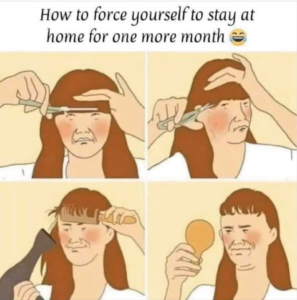
If you’re thinking about cutting your own hair during home confinement, be warned.
There’s a good chance you will end up with a dreaded #CoronaCut.
Hair salons are considered nonessential in the eyes of the state. Most have been
closed for at least three weeks. By now, vanity could be getting the best of you as
you contemplate a DIY doo.
But hair pros say don’t do it! Patience, in this case, truly is a virtue. Wait for
salons to reopen.
Matthew Rodinsky, a hairdresser at Cirque de Cheveux, in Wheeling, WV, advises folks
to “embrace” their isolation hair. He compared cutting your own locks with the
kitchen scissors to fixing a toothache with a drill from the garage.
“Cutting your own hair is only going to make it worse for your hairdresser to
fix and it will cost extra money,” said Rodinsky. “You’re still not
going to be happy because it’s not going to be an instant fix.”
This advice may come too late for those who have already taken matters into their own
hands. The good news is, there’s still time for your DIY hair cut to grow out (at
least a little) while home-isolation is still in effect. Or you could voluntarily
extend home quarantine if vanity deems it necessary.
Some people seem to defy all odds and end up with nice hair despite it all.
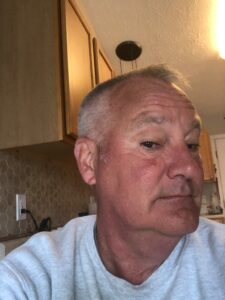
Greg Reinhard gave himself a top-notch clipping and looks very
pleased with his handiwork. Not bad for an amateur!
Not everyone is as good with the clippers as Reinhard though …
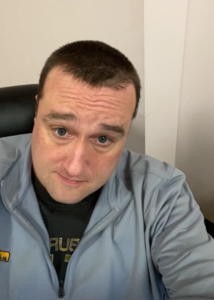
Craig Brown said his wife “laughed maniacally” after giving his
locks a going over with the electric clippers.
Apparently, the basic crew cut isn’t as basic as she thought. Brown’s hair had more
of a bi-level look when his wife wa
s finished.
Brown was a good sport about it.
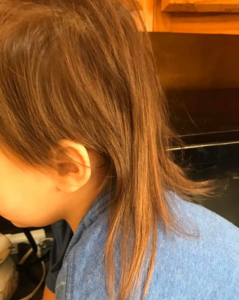
It’s hard to know for sure what Jasmine Ervin’s two-year-old
daughter had in mind for a doo when she began cutting away with safety scissors.
The aspiring cosmetician was stopped mid way when mom intervened. The little one was
left with a partial mullet, much to mom’s dismay.
This is something that Valerie Geibel-Wells could normally fix.
Geibel-Wells owns three Ohio locations of Cookie Cutters Haircuts for
Kids. She said her clients are begging her to reopen and she expects to
be very busy when that happens.
In the mean time, she discourages DIY hair cuts and urges her clients to be patient.
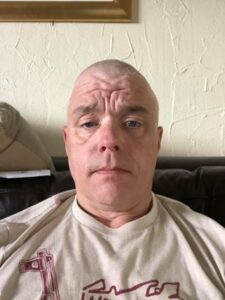
Instead of waiting around for his barber to return to work, JT Todd took
action recently and buzzed his own hair.
When Todd realized he didn’t own hair clippers, he borrowed his dog’s.
He may have gone a little shorter than he wanted. Thankfully, Todd doesn’t plan to
take up professional dog grooming anytime soon.
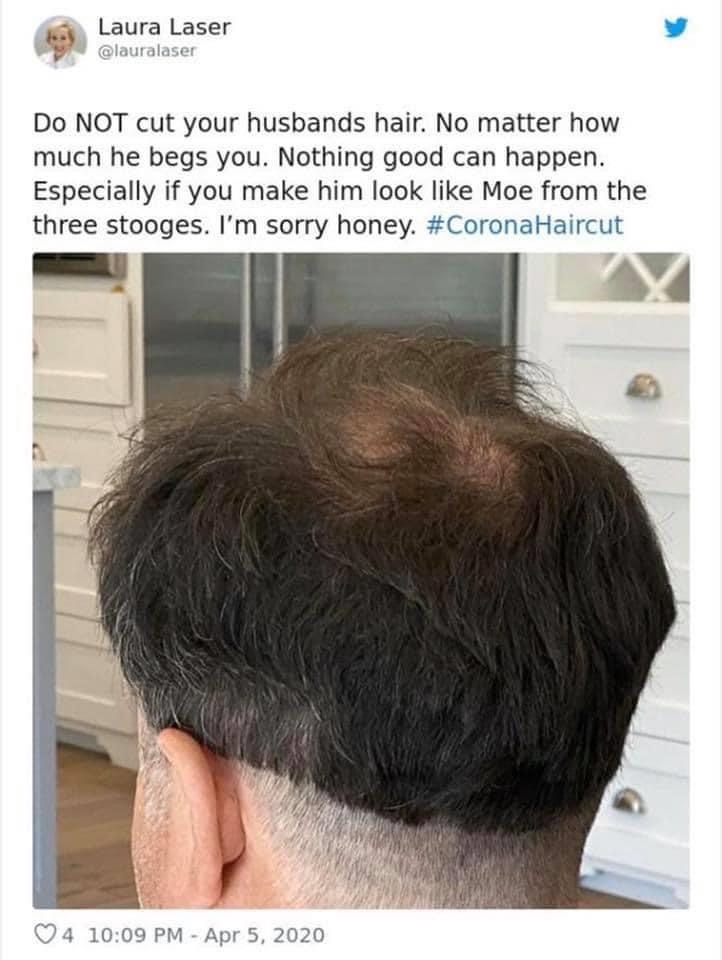
Laura Laser has some advice for women whose spouses are pressuring
them to cut their hair.
“Do NOT cut your husband’s hair. No matter how much he begs you. Nothing good
can happen. Especially if you make him look like Moe from the Three Stooges. I’m
sorry honey.” #coronaHaircut
A brand new, bolder hair color may feel like just what you need to ride out the COVID
crisis. But take it from Glenda Lynn Gambill, normally a blonde bombshell,
hair color from a box can be tricky. You don’t always end up with the color
displayed on the package.
Gambill was none too happy when the auburn dye turned her mane candy apple red. Weeks
later, she’s still trying to tone it down.
Ohio Statehouse News guest writer Del Duduit oiled up his clippers
and ended up with a decent buzz cut. It’s unknown if this was due to luck or skill,
and Duduit claims the view from the back is as snazzy as the front. We will take his
word for it.
If you’re counting on the Flowbee to save your hairstyle during the Corona shut down,
it will cost you a pretty penny. Apparently they’re selling like there’s no tomorrow
and the price has skyrocketed.
The Flowbee used to cost $45 to $50,
but is now listed at $134.99 on Amazon and $149.95 on eBay.
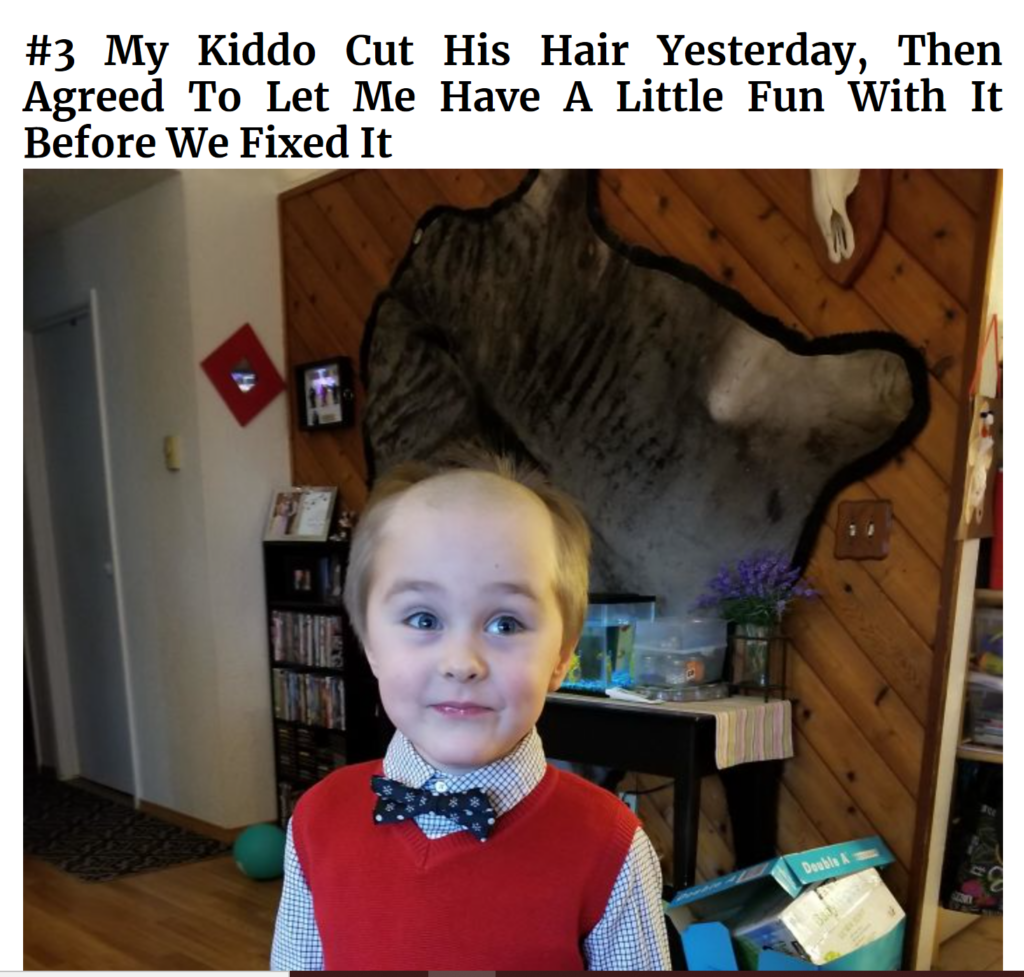
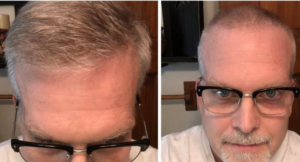
Last, but not least, if you really flub up a #coronacut, you may as
well have some fun with it. This little guy was a good sport and allowed his mom to
age him forward half a century. What a cutie pie.






 The Flowbee used to cost $45 to $50,
but is now listed at $134.99 on Amazon and $149.95 on eBay.
The Flowbee used to cost $45 to $50,
but is now listed at $134.99 on Amazon and $149.95 on eBay.